
Alcohol rehab centers in Kentucky range from medical detox programs and residential campuses to outpatient clinics that offer medication support, and the right fit depends on how severe the drinking is, whether mental health conditions are present, and how much structure a person needs. Kentucky treatment providers generally follow a similar sequence: an assessment, medically supervised withdrawal if needed, therapy, and a plan for life after the program. This review covers four Kentucky providers, explains what each stage of care involves, and describes what to ask before you commit.
What Alcohol Treatment in Kentucky Looks Like
Alcohol treatment in Kentucky is delivered in levels, and most people move through more than one of them. The need is real: Kentucky recorded more than a thousand admissions for alcohol as the primary substance in the 2024 TEDS-A data from SAMHSA, and many more where alcohol occurred alongside a secondary drug.
The same SAMHSA data shows that men make up most alcohol-only admissions. Because of this, it is worth confirming that a program is comfortable treating the person seeking care, regardless of gender, background, or circumstances.
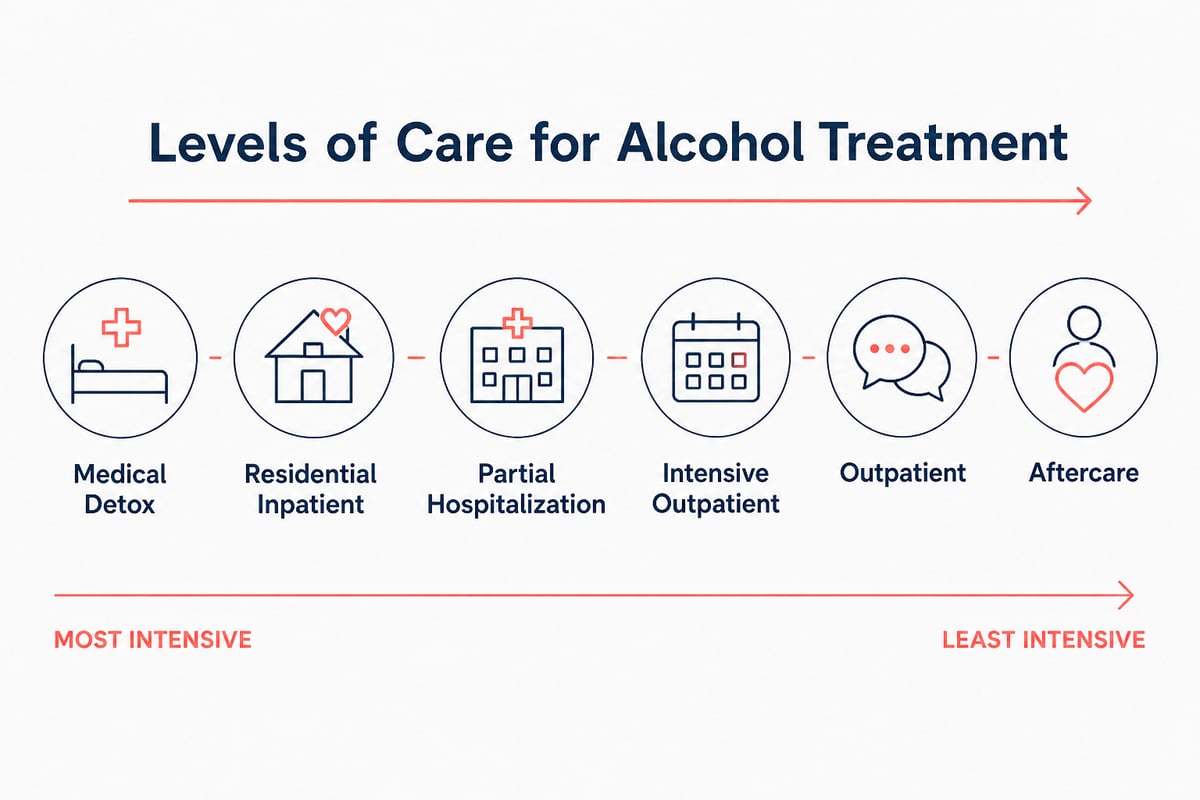
The common levels of care, from most to least intensive, are:
- Medical detox: supervised withdrawal with clinical monitoring
- Residential (inpatient) treatment: 24-hour structured care on site
- Partial hospitalization (PHP): daytime treatment while living elsewhere
- Intensive outpatient (IOP): several sessions per week around work and family
- Outpatient and aftercare: ongoing counseling, medication, and support
Why Detox Comes First for Many People
Medical detox is often the first step because alcohol withdrawal can be medically serious and should not be managed alone. Serenity Ranch Recovery's alcohol detox page describes early withdrawal symptoms as potentially beginning 6 to 12 hours after the last drink, intensifying at 12 to 48 hours, and often peaking at 24 to 72 hours.
That timeline explains why supervised detox is built around the first several days. Clinicians monitor vital signs, manage symptoms, and can use medication to reduce discomfort and risk. Anyone with a history of heavy daily drinking, prior withdrawal complications, or other health conditions should speak with a medical professional before stopping.
Detox addresses the physical dependence only. It is a starting point, not treatment on its own, and the therapy that follows is what addresses why drinking became a pattern.
Four Kentucky Providers Reviewed
The providers below represent different approaches to care. The details come from published program descriptions, and none of this review reflects first-hand use of these facilities.
1. Robert Alexander Center for Recovery
Robert Alexander Center for Recovery offers a connected continuum of care. Its listed services include medical detox, residential treatment, PHP, IOP, outpatient services, and aftercare. It treats substance use along with co-occurring mental health conditions.
Best for: people who want to stay with one provider as their level of care steps down, from detox through outpatient treatment and aftercare.
2. Aura Recovery
Aura Recovery is a Kentucky treatment provider offering medical detox, residential stabilization, and medication-assisted treatment when needed. It treats substance use alongside co-occurring conditions, including anxiety, depression, and PTSD.
Best for: people who need withdrawal support and a program that treats substance use and mental health needs at the same time.
3. Wellness Ranch
Wellness Ranch provides residential treatment and medical detox on one campus. It treats substance use and co-occurring mental health conditions, offers family involvement, and builds continuing-care planning into the process. It accepts some major insurance plans.
Best for: people seeking residential care with integrated mental health treatment and family participation.
4. BrightView
BrightView operates outpatient medication-assisted treatment clinics in Kentucky, including locations in Louisville, Lexington, and Covington. It offers same-day access to medication, along with individual counseling and group therapy, and it accepts Medicaid.
Best for: people who want outpatient treatment with medication support and counseling, including those using Medicaid. Confirm which medications apply to alcohol use in your situation.
5. Individual Care Center: Inpatient Substance Abuse Treatment
Inpatient Substance Abuse Treatment at Individual Care Center is a residential program with 24-hour medical supervision, individual and group therapy, medication management, and aftercare planning. Treatment is built around each patient, with a tailored recovery plan for every person, and family members are actively involved in the process. Care is holistic, combining counseling, medication, and therapies such as acupuncture and yoga. It is offered regardless of gender, race, orientation, age, socioeconomic status, or background. For program length, location details, and costs, contact Individual Care Center directly.
Best for: adults who want a private, individualized residential setting with family involvement and a holistic approach.
6. Individual Care Center: Alcohol Rehab
Alcohol Rehab at Individual Care Center is a comprehensive program covering detox, medication for cravings, counseling, a mental health evaluation, and aftercare. Care is discreet and private, which allows treatment without interrupting home and work life. Because the service is built around alcohol specifically, it suits people whose primary concern is drinking rather than a broader mix of substances.
Best for: adults who want alcohol-focused treatment that includes a mental health evaluation and a plan for aftercare.
How the Providers Compare
The table summarizes the services each provider lists, so you can see where the models differ.
| Provider | Detox | Residential | Outpatient or medication | Mental health focus |
|---|---|---|---|---|
| Robert Alexander Center for Recovery | Yes | Yes | PHP, IOP, outpatient | Co-occurring conditions |
| Aura Recovery | Yes | Residential stabilization | Medication-assisted treatment | Anxiety, depression, PTSD |
| Wellness Ranch | Yes | Yes | Continuing-care planning | Co-occurring conditions |
| BrightView | Not listed | Not listed | Outpatient clinics, Suboxone or Vivitrol | Counseling |
| Individual Care Center (Inpatient) | Not listed | Yes, 24-hour supervision | Medication management | Individual and group therapy |
| Individual Care Center (Alcohol Rehab) | Yes | Not listed | Medication for cravings | Mental health evaluation |
"Not listed" means the feature does not appear in the published descriptions used for this review, not that it is unavailable. Ask each provider directly.
What a Residential Stay Typically Involves
A residential stay is a structured, supervised routine in which you live at the facility and attend therapy daily. Serenity Ranch describes its alcohol rehab process as clinical screening, stabilization when needed, residential therapy, and continuing-care planning.
Residential care also differs from a hospital stay. Residential programs differ from hospital stays, so it is useful to ask each provider how its daily structure compares.
A typical day may include:
- Morning check-in and any scheduled medication
- Group therapy focused on triggers, coping skills, and relapse prevention
- Individual counseling sessions
- Education on how alcohol affects the body and mind
- Holistic activities such as yoga or mindfulness, where offered
- Evening reflection or peer support meetings
Family participation is a feature worth prioritizing. Drinking affects households, and programs that bring relatives into the process, as Wellness Ranch and Individual Care Center both describe, tend to prepare families for the return home.

Medication and Co-Occurring Conditions
Medication can reduce cravings and support early recovery, and mental health care is often part of effective alcohol treatment. Several providers above address both. Aura Recovery lists medication-assisted treatment and treats anxiety, depression, and PTSD. Robert Alexander Center for Recovery and Wellness Ranch both treat co-occurring conditions. Individual Care Center's alcohol program includes medication for cravings and a mental health evaluation.
This matters because untreated anxiety, depression, or trauma commonly drives a return to drinking. A program that screens for these conditions at intake and treats them alongside the alcohol use gives recovery a firmer footing than one that treats drinking in isolation.

Choosing Among Alcohol Rehab Centers in Kentucky
The best choice among alcohol rehab centers in Kentucky is the one that matches the severity of the drinking, the person's health, and the support available at home. Work through these questions with each provider:
- Level of care: Is detox on site, and does the program step down to outpatient care?
- Mental health: Does it screen for and treat co-occurring conditions?
- Medication: Are medications for cravings or withdrawal offered and monitored?
- Family: How are relatives involved, and are they included in planning?
- Privacy: Can treatment be arranged with discretion around work and home life?
- Aftercare: What happens in the weeks and months after discharge?
- Payment: Which insurance plans are accepted, and what will you owe?
Insurance details change, so confirm coverage directly with a provider and with your insurer. Costs, program length, and admission steps vary, which is why a direct conversation is the dependable route.
Who Each Option Suits, and Who Should Look Elsewhere
Different people need different settings, and matching them honestly saves time.
Residential programs suit people with heavy or long-standing drinking, those who have relapsed after outpatient care, and those whose home environment makes abstinence difficult. Wellness Ranch, Aura Recovery, and Individual Care Center's inpatient program fit here.
A connected continuum suits people who want one team from detox through aftercare, as at Robert Alexander Center for Recovery.
Outpatient medication clinics suit people with stable housing and responsibilities that make a residential stay hard. BrightView fits this profile, though its medication emphasis should be checked against an alcohol-specific need.
Who should skip a given option: anyone at risk of severe withdrawal should not attempt outpatient-only care without medical advice, and anyone who needs round-the-clock supervision should not rely on weekly sessions alone.
For people exploring broader options, Individual Care Center also describes related services, including a drug rehabilitation program and an alcohol center. You can learn more about its approach on the about page, and its location directory lists the sites it works with.
Questions to Ask Before You Enroll
Asking specific questions at the start prevents surprises later. Consider raising these on your first call:
- What does the initial assessment cover, and who conducts it?
- How is withdrawal managed, and is a physician available?
- How is a treatment plan tailored to the individual?
- What therapies are used, and which are evidence-based?
- How are family members included, and when?
- What does continuing care look like after discharge?
- How is privacy protected during and after treatment?
A program that answers these clearly and without pressure is usually a better sign than one that promises quick results.
Your next step is simple: write down the answers to the questions above, gather your insurance information, and place one call to a provider to ask about an assessment. If you want a private, individualized program with family involvement, Individual Care Center offers Inpatient Substance Abuse Treatment with 24-hour supervision and a recovery plan built around each patient. Call 866-693-1454 to speak with Individual Care Center about your situation and which level of care fits.