
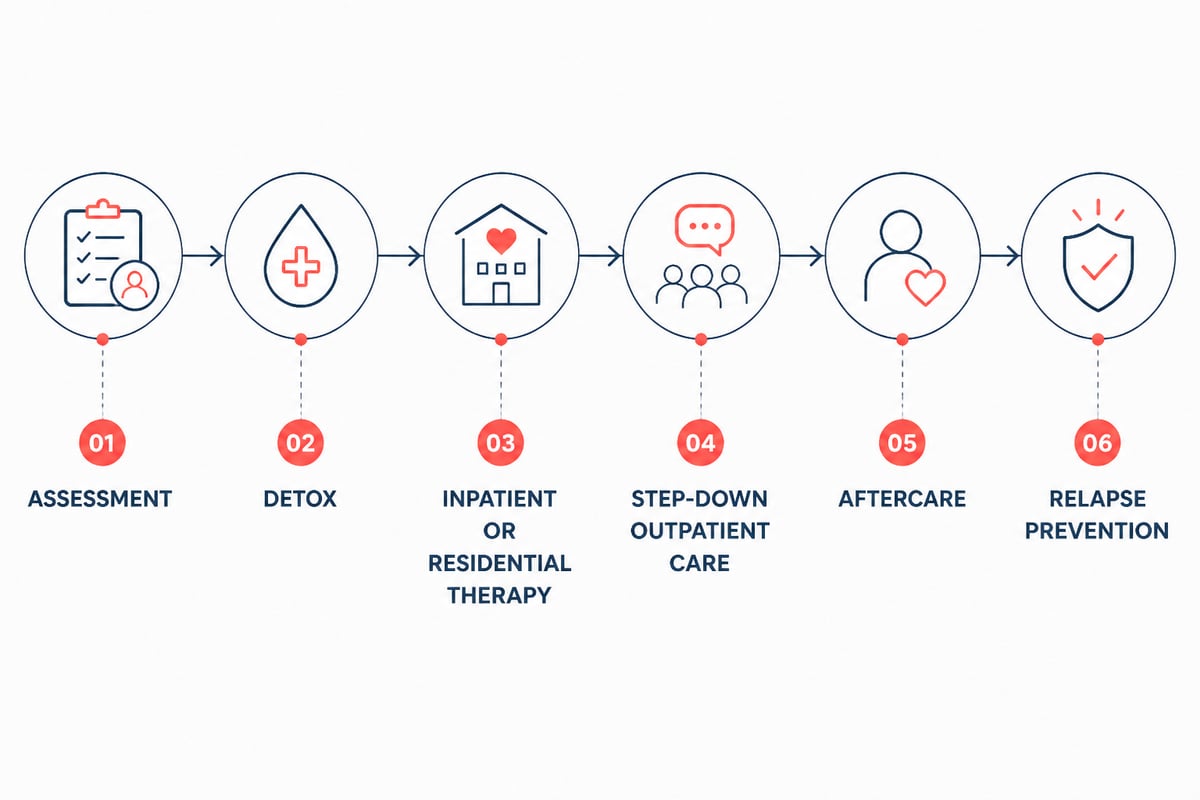
A drug rehabilitation program is a structured course of treatment that moves a person through assessment, medically supervised detox, intensive therapy and ongoing aftercare, with each stage designed to build on the one before it. Most programs run for weeks or months rather than days, and the exact path depends on the substance involved, the severity of the addiction and the person's health and home situation.
Knowing what each stage involves removes much of the uncertainty that keeps people from starting. According to SAMHSA’s 2024 National Survey on Drug Use and Health, only about one in five people who needed substance-use treatment received it in the past year. This guide walks through the full process, from the first phone call to life after discharge.
What are the stages of drug addiction before treatment begins?
Addiction typically develops through four recognizable stages: experimentation, regular use, risky use or misuse, and dependence that progresses to addiction. Understanding where someone falls on this progression helps explain why treatment looks different from person to person. The stages are not a strict timeline. Some people move through them over years, while others, especially with highly addictive substances, can progress much faster, and a person can stall at one stage for a long time before moving on.
- Experimentation: Occasional use, often driven by curiosity or social setting, with little disruption to daily life. A person at this stage may try a drug at a party and not think about it again for weeks.
- Regular use: Use becomes a pattern tied to stress, boredom or specific situations, such as drinking every evening to unwind or using a substance to get through a difficult workweek.
- Risky use: Use continues despite problems at work, in relationships or with health. Missed deadlines, arguments about use and driving under the influence are common signals.
- Dependence and addiction: Tolerance builds, withdrawal appears when use stops, and the person feels unable to quit despite serious consequences.
People who reach the final stage generally need professional treatment. Earlier stages may respond to counseling or outpatient support, which is one reason a proper assessment comes first.
How does a drug rehabilitation program start?
A drug rehabilitation program starts with a clinical assessment that determines how much support a person needs. Clinicians gather information about substance use history, physical health, mental health, safety at home and previous treatment attempts.
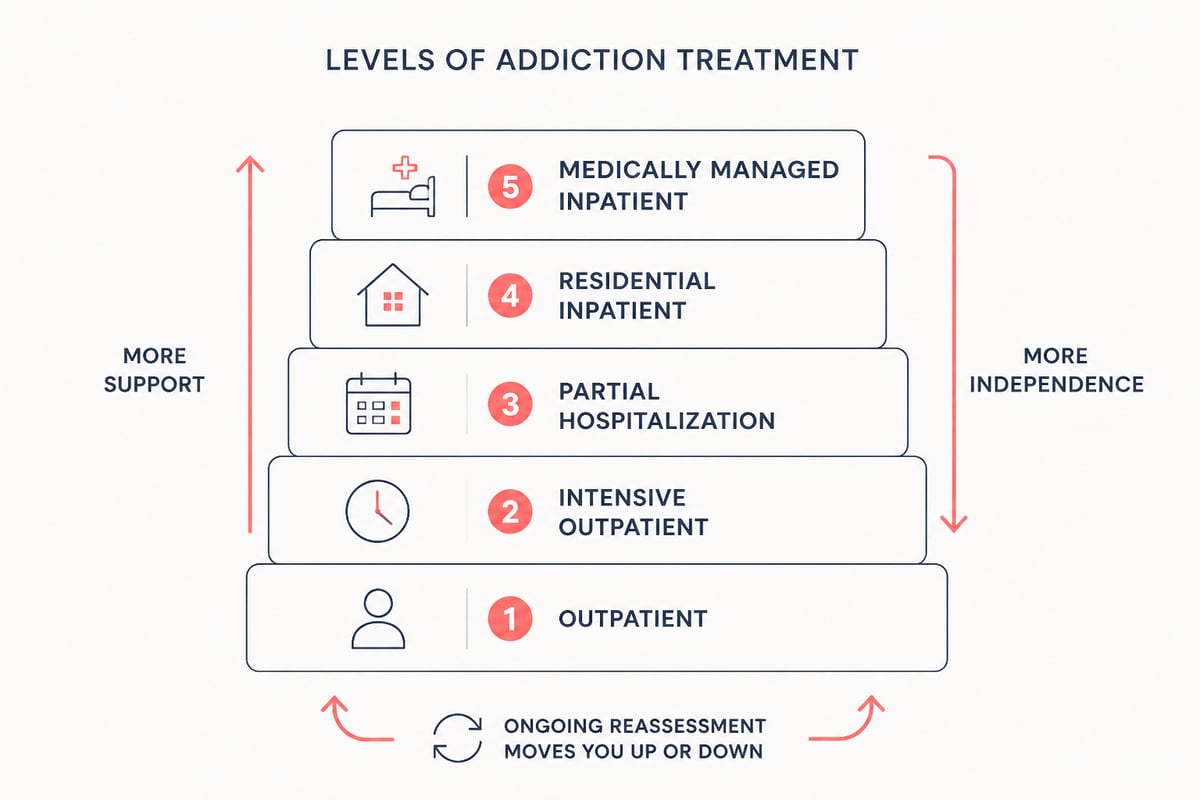
The American Society of Addiction Medicine (ASAM) provides the framework most programs follow. The ASAM Criteria Fourth Edition describes three assessment types: a level-of-care assessment, a treatment-planning assessment, and repeated assessments that update the plan and guide transitions. In practical terms, the first conversation places you at the right intensity of care, and later check-ins adjust that placement as you progress.
At this stage, expect questions that may feel personal. Honest answers lead to a safer and more accurate plan. Family members are often invited to contribute background, and at Individual Care Center, family involvement is part of the treatment process from the beginning.
What does detox involve?
Detox is the medically supervised process of clearing a substance from the body while managing withdrawal symptoms, and its length depends on the drug involved. Its purpose is stabilization. Detox alone does not treat the underlying addiction, so it works best as a bridge into therapy.
Withdrawal varies widely by substance. Alcohol and benzodiazepine withdrawal can be dangerous without medical oversight, while opioid withdrawal is rarely life-threatening but intensely uncomfortable. Medical staff may use medication to ease symptoms, monitor vital signs and respond quickly to complications.
Timelines can stretch longer than people expect. The NHS notes that home detox from heroin can take up to 12 weeks, and a key worker may continue supporting someone for at least six months after detox. That range shows why detox and the support around it should be planned together. You can learn more about drug detoxification and what a supervised setting provides.
What does rehab consist of day to day?
Rehab consists of a daily schedule that combines individual counseling, group therapy, education about addiction, medication management where appropriate, and health-supporting activities. In an inpatient setting, patients live at the facility around the clock, which removes triggers and provides constant structure and supervision.
A typical day may include:
- Morning check-in with nursing or clinical staff
- A group therapy or education session
- An individual counseling appointment
- Meals, rest and recreation or exercise
- Afternoon therapy, such as skills training or family sessions
- An evening reflection or peer support meeting
Individual Care Center builds treatment around each patient, with a tailored recovery plan for every person. Its approach is holistic, combining counseling and medication with therapies such as acupuncture and yoga. These additions address stress, sleep and physical tension, which often drive cravings. To see how structured residential care compares with other formats, review these drug rehab programs.
What types of therapy groups are used in addiction treatment?
Addiction treatment uses several group formats, each with a different purpose: psychoeducational groups, skills development groups, cognitive behavioral therapy groups, support groups and family groups. Most programs combine more than one, and the mix shifts as a patient moves from early stabilization toward discharge planning.
| Group type | Primary focus |
|---|---|
| Psychoeducational | Teaches how addiction affects the brain and body |
| Skills development | Builds coping, communication and refusal skills |
| Cognitive behavioral | Changes thought patterns that lead to use |
| Peer support | Offers shared experience and accountability |
| Family | Repairs trust and teaches loved ones how to help |
Group work matters because isolation sustains addiction. Hearing others describe similar struggles reduces shame and makes the practical lessons easier to absorb. A skills group might rehearse how to decline a drink at a work event, while a cognitive behavioral group might trace how the thought "one night won't matter" leads to a relapse. Peer groups add accountability, since members notice when someone stops showing up. Individual therapy runs alongside these groups to address personal history and any co-occurring conditions, a connection explained further in this overview of drug abuse and mental health.

How long does a drug rehabilitation program last?
Length of stay depends on clinical need, and programs commonly range from about 30 days to several months, followed by step-down care. No single duration fits everyone, and the plan is reviewed repeatedly rather than fixed at admission.
One popular shorthand describes how recovery tends to feel in the first days, weeks and months. The first days tend to bring physical discomfort and doubt, the first weeks bring a slow return of clarity and routine, and the first months bring a growing sense of stability and purpose. It is a helpful way to set expectations, though it is a guideline and not a clinical standard, and individual experiences vary.
ASAM's model also explains why timelines flex. Its care continuum has four broad treatment levels, with decimal levels marking finer differences in intensity and type of care. People can move up or down these levels as their needs change.
What levels of care exist, and how do you choose?
The main levels of care range from early intervention and outpatient services up to residential and medically managed inpatient treatment. Choosing between them depends on withdrawal risk, medical and mental health needs, the stability of the home environment and past treatment history.
- Outpatient: Scheduled sessions while living at home, suited to milder cases with a supportive environment.
- Intensive outpatient and partial hospitalization: Several hours of treatment multiple days a week, with evenings at home.
- Residential or inpatient: 24/7 supervised care in a dedicated facility, suited to severe addiction, unsafe home settings or repeated relapse.
- Medically managed inpatient: The highest intensity, for serious medical or psychiatric complications.
Inpatient care is the right fit when a person needs distance from daily triggers and round-the-clock support. For people who want treatment without a complete break from responsibilities, discreet and private care can reduce disruption to home and work life. Individual Care Center's care is built to be discreet, and it welcomes adults regardless of gender, race, orientation, age, socioeconomic status or background. Compare formats on the drug rehab treatment page.
What happens when you step down from inpatient care?
Stepping down means moving from 24/7 residential treatment to a lower level of care, usually intensive outpatient followed by standard outpatient, while living more independently. This transition is planned, not abrupt, and it is one of the highest-risk periods for relapse if support drops off too quickly.
The ASAM Criteria explain how reassessment can guide transitions to more or less intensive treatment. If cravings spike or stressors grow, the plan can intensify. If stability holds, it can taper.
During step-down, expect:
- Fewer weekly hours of structured therapy
- Continued individual counseling and medication management
- A written relapse-prevention plan naming triggers, warning signs and contacts
- Help rebuilding routines for work, housing and relationships
Family participation continues to matter here. Loved ones who understand the plan can spot early warning signs and respond without blame.
What does aftercare look like?
Aftercare is the long-term support that follows formal treatment, and it typically includes ongoing counseling, peer recovery groups, sober living arrangements where needed, and periodic check-ins with clinicians. Recovery is generally managed over years, not weeks.
Practical aftercare often combines several elements: regular therapy sessions, mutual-help meetings, medication if prescribed, healthy routines such as exercise and sleep, and a trusted network of people who know the plan. Alumni and community connections add accountability.
The outlook is encouraging. SAMHSA reports that among adults who said they had ever had a drug or alcohol problem, 74.3% considered themselves in recovery or recovered in 2024. Sustained recovery is common, and structured support is what makes it more likely. Individual Care Center reflects this community focus, with over 1,000 active members, 5,500 people helped and 458 events organized.
FAQ
Is a drug rehabilitation program covered by privacy protections?
Treatment records are generally protected by federal and state confidentiality rules, and reputable facilities explain these protections during admission. Ask any program how it handles records, communication with employers and family contact before you enroll. Specific questions to raise include who is allowed to confirm your attendance, whether you can sign releases that name only certain relatives, and how the facility responds if an employer or insurer requests information. Written consent forms should spell out exactly who may receive what, and you can usually revoke or narrow that permission later.
Can family members take part in treatment?
Yes, and family involvement often improves outcomes. Family sessions teach loved ones about addiction, repair communication and prepare everyone for life after discharge. Individual Care Center actively involves family members in the treatment process. In practice, this can mean sharing background during the first assessment, joining a scheduled family session, and learning what early warning signs look like, such as withdrawal from routines, secrecy or sudden changes in sleep. Families also benefit from setting clear expectations together, including how to respond to a missed appointment or a craving without turning to blame.
What should I bring or prepare before entering inpatient rehab?
Bring comfortable clothing, a list of current medications, identification and insurance information, and arrange coverage for work, childcare or pet care. The admissions team can provide a specific packing list and explain which items are restricted. Before arrival, it helps to ask your employer about leave options, set up automatic payments for bills, and write down the names and phone numbers of the people you want on your contact list, since phones may be limited. Ask whether prescribed medications should come in original bottles and whether the facility will manage dosing once you are admitted.
Your next step is simple: call a treatment provider and ask for an assessment, since a single conversation can clarify which level of care fits your situation. Individual Care Center builds a tailored recovery plan for each person, involves family members and offers discreet care that respects your privacy, so Call 866-693-1454 to speak with the Individual Care Center team about starting treatment. You can also review drug rehab centers beforehand if you want to understand your options first.