
An alcohol addiction detox center is a facility where medical staff supervise the first days of stopping alcohol, treating withdrawal symptoms and monitoring for complications so that the process is safe. Detox clears alcohol from the body, but it is the first step of treatment rather than the whole of it. This guide explains what happens inside a detox center, how long it lasts, what separates good programs from weak ones, and how to decide which level of care fits your situation.
What Is an Alcohol Addiction Detox Center?
An alcohol addiction detox center provides medically supervised withdrawal management for people who have become physically dependent on alcohol. Staff monitor vital signs, prescribe medication to ease symptoms and prevent seizures, and keep patients hydrated and nourished while the body adjusts to the absence of alcohol.
Detox is necessary because long-term heavy drinking changes how the nervous system works. When alcohol is removed suddenly, the brain stays overactive, which produces the physical and psychological symptoms of withdrawal. Unlike withdrawal from many other substances, alcohol withdrawal can be life-threatening without medical care.
The care team usually includes physicians, nurses, and counselors working from a shared plan. Nurses check blood pressure, heart rate, temperature, and symptom severity at set intervals, and physicians adjust medication based on those readings. Patients typically stay in a calm, low-stimulation setting where rest and meals are protected, because poor nutrition and dehydration are common after long periods of heavy drinking. Counselors begin short conversations about motivation and next steps once a patient is steady enough to engage.
Detox differs from rehab in scope. Detox addresses the body's immediate physical dependence. Rehab addresses the habits, triggers, relationships, and mental health conditions that drive drinking. Detox alone rarely produces lasting recovery, which is why the strongest programs connect the two. Individual Care Center explains its approach in more detail on its alcohol detox center page.
Why Alcohol Withdrawal Needs Medical Supervision
Alcohol withdrawal can cause seizures, hallucinations, and confusion, so supervised detox is the safest route for anyone who drinks heavily or daily. The NHS lists tremor, sweating, nausea or vomiting, hallucinations, confusion, and seizures among the symptoms of alcohol withdrawal.
Severity varies widely. Some people experience only anxiety, poor sleep, and sweating. Others progress to delirium tremens, a medical emergency marked by severe confusion, fever, and a racing heart. Predicting which path a person will follow is difficult, and that unpredictability is the strongest argument for supervision.
These factors raise the risk of a complicated withdrawal:
- A history of seizures or previous severe withdrawal
- Heavy daily drinking over many years
- Other medical conditions, such as liver disease or heart problems
- Co-occurring mental health conditions
- Use of other substances alongside alcohol
If you or someone you love falls into any of these categories, do not attempt to stop drinking abruptly at home. Understanding the effects of withdrawing from alcohol helps families recognize when a situation has become urgent.
What Is the Alcohol Detox Timeline?
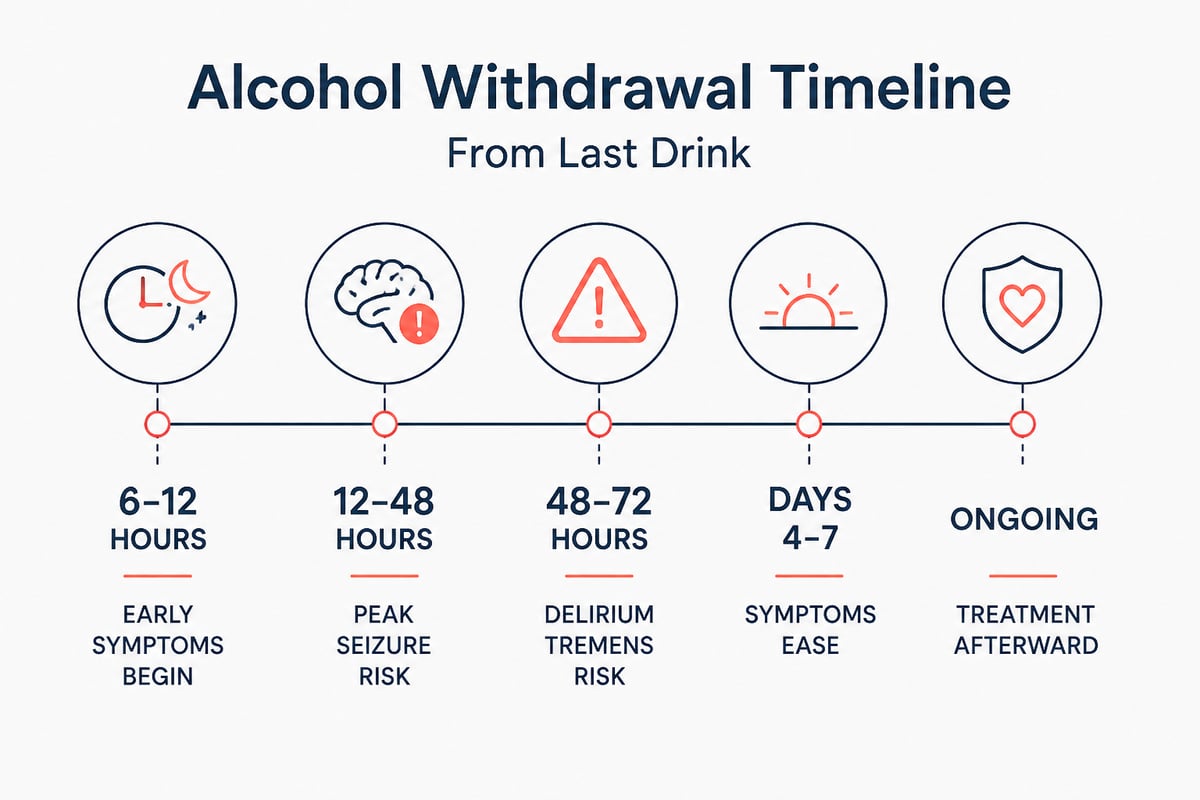
Withdrawal usually begins within hours of the last drink and peaks in the first few days. According to the NHS, symptoms can begin 6 to 12 hours after the last drink and usually last 3 to 7 days.
A typical course looks like this:
- First 6 to 12 hours: Anxiety, tremor, sweating, nausea, and headache often appear as blood alcohol falls.
- 12 to 48 hours: Symptoms intensify. This window carries the highest risk of withdrawal seizures and hallucinations.
- 48 to 72 hours: Delirium tremens can develop in severe cases, which is why monitoring is most intensive here.
- Days 4 to 7: Physical symptoms ease for most patients, though sleep disturbance, mood changes, and cravings can linger.
Individual timelines differ based on drinking history, age, overall health, and whether medication is used. Some people continue to feel fatigue, irritability, and low mood for weeks afterward. This is another reason detox should lead directly into ongoing treatment rather than ending when the acute symptoms pass.
What Happens Inside a Detox Center?
Care at a detox center follows a structured sequence: assessment, stabilization, and a transition plan for what comes next. Knowing the sequence in advance reduces anxiety about the unknown.
Intake and Assessment
On arrival, clinicians review your drinking history, medical conditions, current medications, and mental health. They check vital signs and often order lab work. This assessment determines the intensity of monitoring you need and which medications are appropriate.
Stabilization and Symptom Management
During active withdrawal, nurses and physicians track your vital signs at regular intervals and adjust medication as symptoms change. Medications commonly used in alcohol withdrawal include benzodiazepines to reduce seizure risk and agitation, along with thiamine and other vitamins to address nutritional deficiencies. Fluids, rest, and a quiet environment support the process. Detailed information on medical detox explains how this supervision works in practice.
Planning the Next Step
Good detox programs begin discharge planning early. Before withdrawal ends, the treatment team should discuss residential rehab, outpatient care, medication for cravings, and counseling. Leaving detox without a plan is one of the most common points at which people return to drinking.
How to Choose an Alcohol Addiction Detox Center
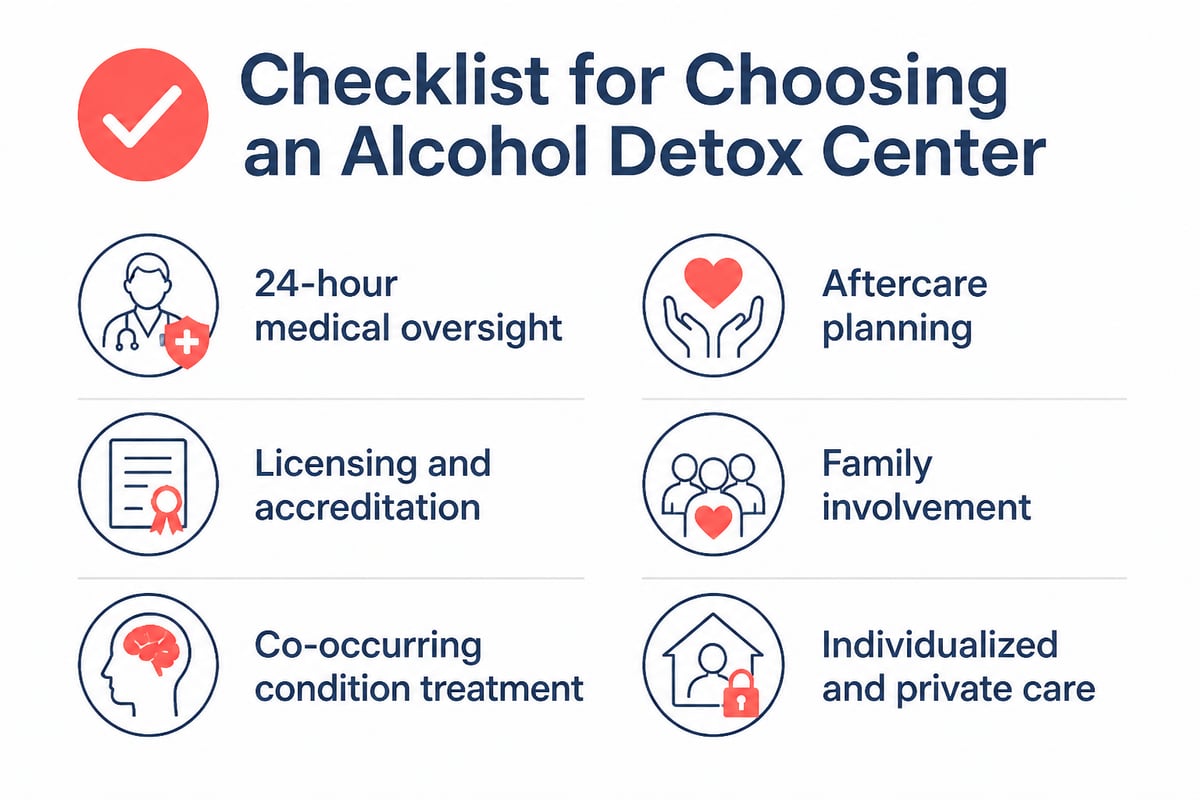
Choose a detox center by checking its medical capability, its connection to ongoing treatment, and how well it fits your personal circumstances. A short list of questions makes the comparison practical.
- Is there 24-hour medical oversight? Physicians and nurses should be available around the clock, with protocols for seizures and delirium tremens.
- Is the program licensed and accredited? Ask which state agencies license the facility and whether it holds national accreditation.
- How does it treat co-occurring conditions? Depression, anxiety, and trauma are common alongside alcohol dependence and should be evaluated, not ignored.
- What happens after detox? Look for a clear path into rehab, outpatient therapy, and aftercare.
- Is family involved? Families often carry part of the burden and can strengthen recovery when included in treatment.
- Is the care private and individualized? A standardized plan applied to every patient fits no one well.
Cost and insurance matter as well. Ask the admissions team directly what your coverage includes and what you would pay out of pocket, and request the answers before committing. Individual Care Center directs prospective patients to its contact page for details of this kind. If you are comparing options by location, resources on alcohol detox near me can help narrow the search.
Inpatient Detox or Outpatient Detox: Which Level of Care Fits?
The right setting depends on withdrawal risk, health, and home environment, not on convenience alone. The American Society of Addiction Medicine (ASAM) says level-of-care decisions should consider current symptoms, the risk of severe or complicated withdrawal, and factors such as recovery support and living environment.
Inpatient detox suits people with a high risk of complications, a history of seizures, significant medical or psychiatric conditions, or an unstable or unsupportive home. Round-the-clock staff can respond immediately if symptoms escalate.
Outpatient detox may suit people with mild to moderate symptoms, a low risk of complications, and a stable, sober household. ASAM's guidance on ambulatory withdrawal management recommends daily check-ins with a qualified health provider for up to five days after stopping or reducing alcohol use. Outpatient care requires reliable transportation, a responsible adult nearby, and the discipline to follow the plan.
Only a clinical assessment can settle the question. If you are unsure, an assessment with a treatment professional is a safer starting point than a guess. More on alcohol outpatient programs outlines when that route may be appropriate.
What Comes After Detox?
Detox is followed by rehabilitation, which addresses the causes and patterns of drinking that detox does not touch. Without this step, relapse risk stays high because the underlying drivers remain.
Effective ongoing treatment typically combines several elements:
- Individual and group counseling to build coping skills and identify triggers
- Medication for cravings, prescribed and monitored by a physician
- Mental health evaluation and treatment for co-occurring conditions
- Family participation to repair relationships and build a supportive home
- Aftercare planning to maintain structure once formal treatment ends
Individual Care Center offers Alcohol Rehab that combines detox, medication for cravings, counseling, mental health evaluation, and aftercare in one continuum. Treatment is built around each patient with a tailored recovery plan, involves family members actively, and takes a holistic approach that adds therapies such as acupuncture and yoga to counseling and medication. Care is discreet and private, which allows treatment without interrupting home and work life. Services are available regardless of gender, race, orientation, age, socioeconomic status, or background.
How Common Is Seeking Detox Help?
Many people seek withdrawal-management services each year, which shows that you would not be alone in asking for help. In the 2025 National Survey on Drug Use and Health, SAMHSA reported that 2.2% of people, or 989,000 people, received withdrawal-management services.
That figure matters because shame is a significant barrier to treatment. Alcohol dependence is a medical condition with recognized treatments, and detox is a routine part of care in the field. A person who calls a detox center is asking for a clinical service that many people use each year.
Seeking help early also tends to make the process safer and shorter to arrange. Someone who waits until a withdrawal episode is already underway, or until a seizure or a health scare forces the issue, has fewer choices about where and how to be treated. Making the call while symptoms are still manageable keeps more options open, including the level of care. Understanding the broader effects of alcohol addiction on health, relationships, and work can also help families see why early intervention is worth pursuing.
How Can Families Support Someone Entering Detox?
Families help most by staying calm, informing themselves, and supporting treatment without taking over decisions. Detox is physically demanding and emotionally charged, and the person entering it may feel fear, shame, or ambivalence. A steady, practical presence matters more than persuasive speeches.
Practical ways to help include:
- Learning the warning signs of severe withdrawal so you can act quickly
- Helping with logistics such as transportation, work notifications, and childcare
- Avoiding blame, ultimatums, or lectures during the process
- Asking the treatment team how and when family can participate
- Taking care of your own health, since supporting a loved one is demanding
Knowing the warning signs has real value. The NHS lists hallucinations, confusion, and seizures among withdrawal symptoms, and because symptoms can begin 6 to 12 hours after the last drink, a relative who is present in that window can recognize trouble early and call for help. Logistics deserve equal attention. Arranging a ride to the facility, informing an employer that a leave is medical, and covering school pickups remove the small obstacles that often derail a planned admission.
Tone matters during conversations. Saying "I am worried about your health and I will drive you there" invites cooperation, while listing past failures usually produces defensiveness. Keep your own needs in view as well: sleep, meals, and your own support, whether a counselor or a family group, keep you steady for the weeks after detox ends.
Family involvement is built into care at Individual Care Center, so relatives can take part in the treatment process rather than waiting on the sidelines. For parents of adolescents struggling with alcohol or other substances, the same principle applies: early, informed, nonjudgmental involvement can help a young person stay engaged in treatment.

If you are unsure where to start, write down the date of the last drink, how much and how often you drink, and any medical conditions, then bring that list to your first conversation with a treatment provider. That information lets clinicians recommend the right level of care quickly. Individual Care Center can assess your situation, explain how its Alcohol Rehab program connects detox to ongoing recovery, and answer questions about privacy and family involvement. Reach out through Individual Care Center or Call 866-693-1454 to speak with the team about the next step.