
The right choice among Minnesota alcohol rehab centers starts with a professional assessment, which identifies the level of care you need, followed by a check of program quality, cost coverage and aftercare. Adults and families searching today will find options ranging from weekly outpatient counseling to 24-hour residential and inpatient programs, and matching the setting to the severity of the problem matters more than any facility's name or location.
This guide walks through the decisions in the order most people face them: whether treatment is needed, what the levels of care mean, how to pay, how to judge quality, and what recovery support looks like after discharge.
Do You Need Alcohol Treatment?
You likely need professional treatment if alcohol is causing repeated problems with health, relationships, work or safety, or if you cannot cut back despite wanting to. Withdrawal symptoms, drinking in the morning to steady yourself, and failed attempts to quit are common signs that self-directed efforts are not enough.
Common warning signs include:
- Drinking more or for longer than you intended
- Needing more alcohol to feel the same effect
- Shaking, sweating, nausea or anxiety when you stop
- Continuing to drink despite health, legal or family consequences
- Spending a large share of your time obtaining alcohol or recovering from its effects
Seeking help is less common than the need for it. The National Institute on Alcohol Abuse and Alcoholism reports that only about 7.8% of U.S. adults with past-year alcohol use disorder accessed any kind of treatment. That figure is national rather than specific to Minnesota, but it shows how many people go without care. If the signs above sound familiar, a conversation with a clinician is a reasonable first step, and it commits you to nothing.
What Levels of Care Are Available in Minnesota?
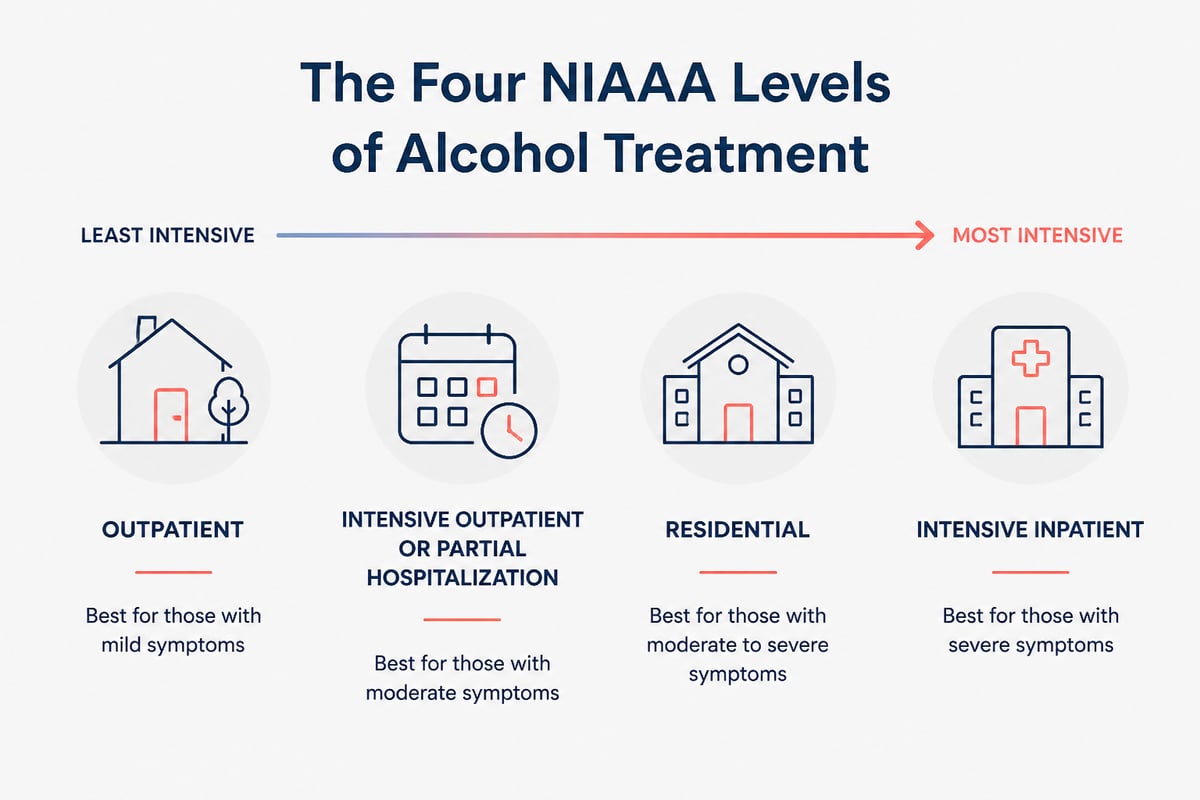
Treatment programs generally follow a common structure: NIAAA describes four basic levels of alcohol-treatment care, namely outpatient, intensive outpatient or partial hospitalization, residential, and intensive inpatient. Each level offers a different amount of structure and supervision.
| Level of care | Typical structure | Often suited to |
|---|---|---|
| Outpatient | Scheduled counseling sessions while living at home | Mild problems, strong home support, stable routines |
| Intensive outpatient or partial hospitalization | Several hours of treatment most days, home in the evening | Moderate problems, need for structure without full residence |
| Residential | Live at the facility with daily programming | A home environment that makes abstinence difficult |
| Intensive inpatient | 24-hour medical and clinical supervision | Severe dependence, withdrawal risk, co-occurring conditions |
Time commitments and intensity vary by program, so confirm specifics with each provider. For a closer look at how a residential setting works, see this overview of alcohol rehab inpatient treatment.
How Does a Comprehensive Assessment Work?
A comprehensive assessment is a structured clinical interview that reviews your drinking history, physical health, mental health and living situation to recommend a level of care. NIAAA states that a complete assessment of a person's alcohol problems and complications helps determine the appropriate level of care, which is why it comes before any placement decision.
Expect questions in several areas:
- How much and how often you drink, and for how long
- Past withdrawal symptoms, including seizures or confusion
- Medical conditions and current medications
- Mental health symptoms such as depression, anxiety or trauma
- Home stability, work obligations and family support
- Previous treatment attempts and what did or did not help
Be candid during this interview. An assessment based on understated drinking can place you in a setting that is too light, and a setback in the wrong setting costs time and confidence. Ask any provider whether their assessment satisfies the requirements for any public funding you may be eligible for.
Why Detox Comes First for Many People
Medically supervised detox is the first stage for many people because stopping alcohol abruptly can cause dangerous withdrawal, including seizures and delirium tremens. Detox manages those symptoms safely, but it is not treatment on its own. It clears the body so that counseling and therapy can begin.
If you drink heavily every day, do not stop suddenly without medical guidance. Withdrawal timing, symptoms and risks are explained in more detail in this resource on alcohol withdrawal effects, and the detox after alcohol page describes what follows once the acute phase passes. A good program connects detox directly to the next level of care, because discharging someone from detox with no plan is a common point of relapse.
What Should You Look for in Minnesota Alcohol Rehab Centers?
Quality in Minnesota alcohol rehab centers shows up in licensing, individualized planning, evidence-based methods and a clear continuing-care plan. NIAAA provides a practical framework in its guide to choosing quality care, including how to compare options and ask about continuing recovery support.
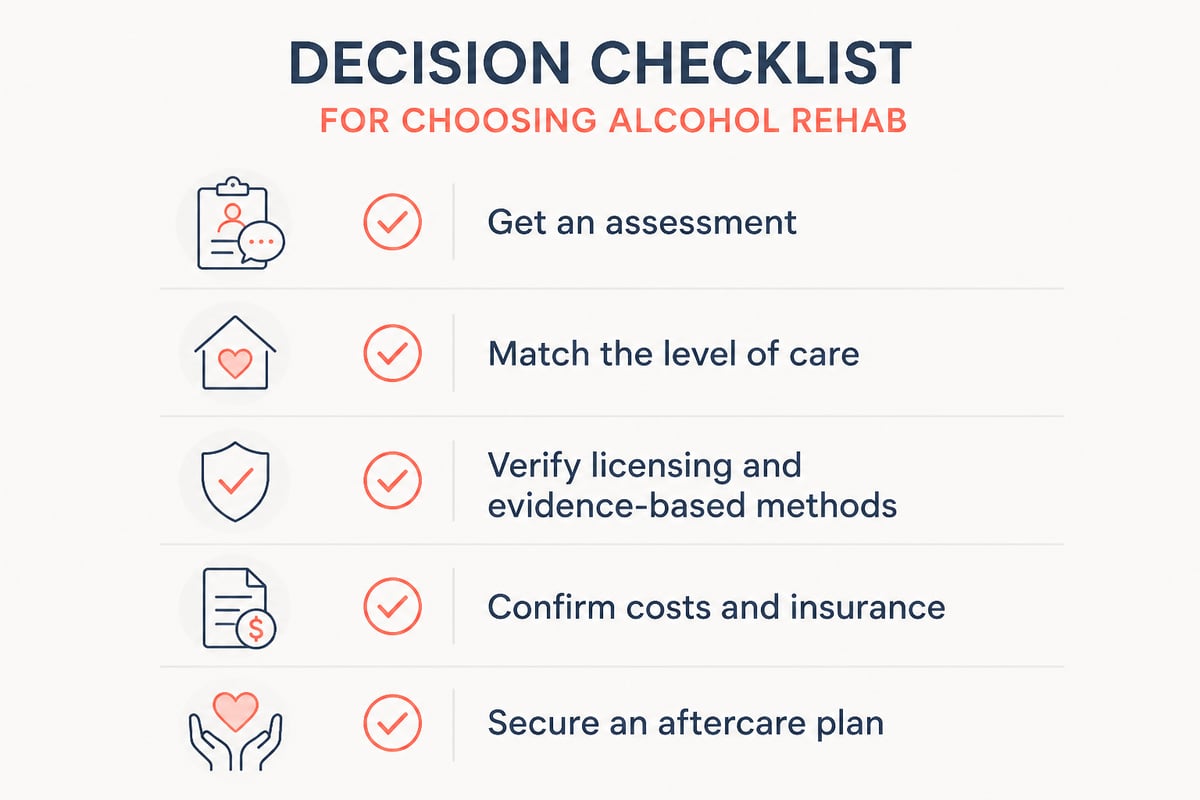
Use this checklist when you call or tour a facility:
- Licensing and credentials: Confirm the program is state licensed and that clinicians hold appropriate credentials.
- Individualized plans: Ask how the plan is built around the person rather than a fixed curriculum.
- Evidence-based care: Look for counseling methods with research support and medications for alcohol use disorder where appropriate. NIAAA summarizes these in its overview of evidence-based treatment options.
- Co-occurring care: Ask whether depression, anxiety or trauma are evaluated and treated alongside alcohol use.
- Family involvement: Find out how relatives are included in sessions and education.
- Aftercare: Ask what support exists after discharge and how long it lasts.
- Transparency: A reputable program explains costs, rules and expectations plainly before admission.
Be cautious of guarantees of a cure, pressure to commit the same day, or reluctance to answer questions about staffing and methods.
How Do You Pay for Treatment in Minnesota?
Most people pay for treatment through a mix of private insurance, public programs and personal funds, and the right mix depends on your coverage and income. Start by calling the number on your insurance card and asking about substance use disorder benefits, covered levels of care and in-network facilities.
Options to explore include:
- Private insurance: Ask about deductibles, copayments, prior authorization and limits on residential days.
- Public coverage: Public programs can fund assessments and treatment for eligible residents, and your local human services office can explain eligibility.
- Employer benefits: An employee assistance program may cover initial counseling or referrals.
- Self-pay arrangements: Some programs offer payment plans, which you can request directly.
Insurance rules are detailed, so a helpful reference is this page on alcohol rehab insurance. Ask every facility for a written estimate that separates detox, daily treatment and any medication costs, so you can compare programs on the same terms.
What Is the Minnesota Model of Treatment?
The Minnesota Model is a treatment approach that treats addiction as a primary, chronic condition addressed by a multidisciplinary team. It typically combines medical care, counseling, education, family participation and an introduction to peer mutual-help groups, and many programs still draw on its principles.
In practice, today's programs adapt the model with newer methods. When a facility says it follows this tradition, ask what it includes now: individual therapy, medication options, family sessions and a structured transition to ongoing support.
What Does a Holistic, Private Program Look Like?
A holistic program treats the whole person, combining counseling and medication with complementary therapies and involving the family. Individual Care Center builds each recovery plan around the individual patient, includes family members actively in treatment, and pairs counseling and medication with therapies such as acupuncture and yoga. Care is discreet and private, which can allow treatment without disrupting home and work life, and it is offered regardless of gender, race, orientation, age, socioeconomic status or background.
For readers weighing detox, medication for cravings, counseling, a mental health evaluation and aftercare in one plan, the Alcohol Rehab service outlines that full pathway. Whether you choose a Minnesota facility or a program elsewhere, the questions are the same: Is the plan individualized? Is the family involved? Does the program plan for what happens after discharge?

Are There Sober Houses Available in Minnesota?
Yes, sober housing is available in Minnesota, and many people use it as a bridge between residential treatment and independent living. These homes provide an alcohol-free environment with house rules, peer accountability and, in some cases, required meeting attendance or drug testing.
Quality and oversight vary widely, so evaluate a sober home before committing:
- Ask about house rules, curfews and consequences for relapse
- Confirm costs, deposits and what happens if you leave
- Ask whether residents work or attend outpatient treatment during their stay
- Visit in person and speak with current residents
Your treatment team can often recommend housing connected to your program, which tends to be more reliable than a cold search. Sober housing works best alongside continued counseling or outpatient care, not as a replacement for it.
How Do You Plan for Life After Rehab?
A strong aftercare plan covers the first year after discharge with scheduled counseling, peer support, medication management where prescribed and a clear response to cravings or relapse. Recovery is a process rather than an event, and the weeks after leaving a structured setting are often the most vulnerable.
Build your plan before discharge with your care team:
- Schedule outpatient or intensive outpatient follow-up for the first weeks
- Identify a mutual-help group or recovery community you will attend regularly
- Arrange stable, alcohol-free housing
- Name two or three people you will contact when cravings hit
- Decide how family members will take part in your ongoing support
- Set dates for medication reviews if you take medication for alcohol use disorder
Programs that stay in contact after discharge give you a safety net while you rebuild routines. For a view of how the full journey is organized, the rehab process page maps the stages from admission through continuing care.
FAQ
What are some well-known rehab centers in Minnesota?
Many programs across the state offer addiction treatment. Rather than relying on reputation, verify each facility's licensing, ask about individualized planning and aftercare, and compare written cost estimates before deciding.
Can I get treatment without leaving work or home life behind?
Often, yes. Outpatient and intensive outpatient programs are designed around daily life, and discreet private care can make it easier to keep work and family routines in place. Your assessment will show whether that level of care is safe for your situation or whether a residential setting is the better fit.
How long does alcohol rehab take?
Length depends on the level of care, the severity of the problem and your progress, so no single timeline fits everyone. Ask each program how it decides when to step you down to a lighter level of care and what continuing support follows.
Your next step is to schedule a comprehensive assessment, since it determines which level of care fits and gives you specifics to compare across programs. If you want a private, individualized option that involves your family and combines counseling, medication and complementary therapies, explore the Alcohol Rehab program at Individual Care Center. You can speak with an admissions specialist today, because Individual Care Center will answer your questions about inpatient care, where patients reside at the facility around the clock with supervised, highly structured treatment, when you call 866-693-1454.