A drug and treatment center is a licensed facility that provides medical care, therapy and support to people recovering from drug or alcohol addiction, usually through an assessment, a personalized plan and a structured program that may be residential or outpatient. Knowing what happens at each stage makes the first call far less intimidating for the person seeking help and for the family standing beside them.
This guide walks through how treatment works, the types of programs available, what a typical day looks like, how to choose a facility, and how to prepare for admission.
How Common Is Addiction Treatment, and Why Do So Many People Go Without It?
Millions of Americans need treatment, and most do not receive it. According to the SAMHSA 2024 National Survey on Drug Use and Health, 52.6 million people aged 12 or older were classified as needing substance use treatment in 2024, and 10.2 million received it.
The same survey shows that only 19.3% of people who needed treatment got it. The rate was 11.3% for young adults aged 18 to 25, 20.5% for adults 26 and older, and 30.2% for adolescents aged 12 to 17. SAMHSA also publishes a summary of the 2024 findings that describes how treatment receipt differs by age group.
Common reasons people delay care include:
- Fear of judgment from family, employers or neighbors
- Uncertainty about what treatment involves
- Concern about missing work or school
- Doubt that treatment will work
- Not knowing which type of program fits their situation
Each of these concerns has a practical answer, and most are addressed by understanding the process before you commit to it.
What Does a Drug and Treatment Center Actually Do?
A drug and treatment center evaluates each person, stabilizes them medically if needed, delivers therapy and medication-based care, and plans for life after the program ends. The goal is not only to stop substance use but to treat the conditions and habits that sustain it.
Services typically include:
- Assessment and diagnosis. Clinicians review substance use history, physical health, mental health and home circumstances.
- Medical stabilization. When a substance causes dangerous withdrawal, staff manage symptoms under supervision.
- Therapy. Individual, group and family sessions address triggers, coping skills and relationships.
- Medication management. Some medications reduce cravings or treat co-occurring conditions such as depression or anxiety.
- Aftercare planning. Staff arrange continuing support before discharge so progress is not lost.
Addiction is a medical condition, not a character flaw, and reputable programs approach it that way. That framing shapes everything from how staff speak to patients to how treatment plans are written.
What Are the Three Types of Rehab?
The three main types of rehab are inpatient (residential), outpatient and partial hospitalization or intensive outpatient programs, which fall between the two. The right choice depends on the severity of the addiction, medical risk, home stability and the person's other obligations.
| Program type | Where you live | Typical structure | Often suited to |
|---|---|---|---|
| Inpatient (residential) | At the facility, 24/7 | Daily therapy, medical oversight, structured schedule | Severe addiction, unsafe home environment, past relapses |
| Partial hospitalization / intensive outpatient | At home | Several hours of treatment multiple days per week | Moderate needs, stable home life, step-down from residential |
| Standard outpatient | At home | Weekly or biweekly sessions | Mild addiction or ongoing maintenance after higher care |
Many people move through more than one level. A common path is residential care first, then intensive outpatient, then standard outpatient as stability grows.
If outpatient care is what you are researching, the directory includes listings such as Rio Grande ATP intensive outpatient treatment that show how those programs are described.
What Is Inpatient Treatment Like Day to Day?
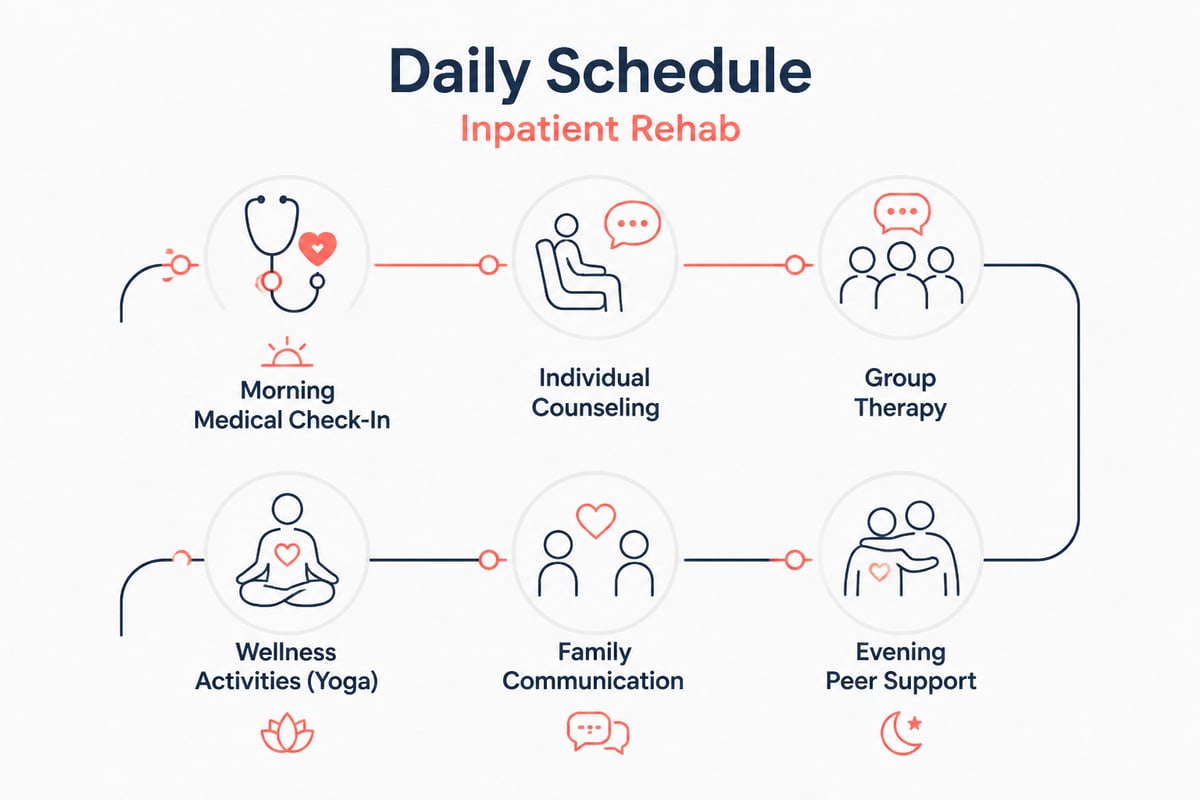
Inpatient treatment replaces an unpredictable daily routine with a structured one, with meals, therapy, rest and recreation scheduled and supervised around the clock. Patients live at the facility for the length of their program, which removes access to substances and everyday triggers.
A typical day may include:
- A morning check-in with nursing or medical staff
- Individual counseling and group therapy sessions
- Educational sessions on addiction, relapse prevention and coping skills
- Time for exercise, mindfulness or other wellness activities
- Scheduled family communication, depending on the program
- Evening reflection or peer support meetings
Individual Care Center’s inpatient substance abuse treatment is an example of this model, offering residential care with 24-hour medical supervision, individual and group therapy, medication management and aftercare planning. Its approach is holistic, combining counseling and medication with therapies such as acupuncture and yoga, and each patient receives a recovery plan tailored to them.
What Is the Most Common Treatment for Substance Use Disorder?
The most common treatment for substance use disorder is behavioral therapy, often combined with medication when an effective medication exists for the substance involved. Counseling approaches such as cognitive behavioral therapy help people recognize triggers and build alternatives to substance use.
Medication is used differently depending on the substance. For opioid and alcohol use disorders, several approved medications reduce cravings or withdrawal discomfort, and clinicians often recommend them alongside therapy. For stimulants and some other substances, treatment relies more heavily on behavioral methods and support.
Effective programs also screen for co-occurring mental health conditions. Depression, anxiety and trauma frequently accompany addiction, and treating only one tends to leave the other driving relapse. Readers who want to understand this overlap can review drug abuse and mental health for further background.
What Is the 3-3-3 Rule for Addiction?
The 3-3-3 rule is an informal framework describing early recovery as three phases: roughly the first three days, three weeks and three months, each with distinct challenges. It is a popular rule of thumb rather than a clinical standard, so individual timelines vary.
- First three days: Physical withdrawal is often at its peak, and medical supervision matters most here.
- First three weeks: Physical symptoms ease, but cravings, mood swings and sleep problems often continue.
- First three months: Daily routines, coping skills and support systems begin to take hold, and the risk of complacency or relapse remains real.
The framework is useful mainly as a reminder that early recovery is a process with predictable pressure points. It does not replace a clinician's judgment about your timeline.

How Do You Choose the Right Drug and Treatment Center?
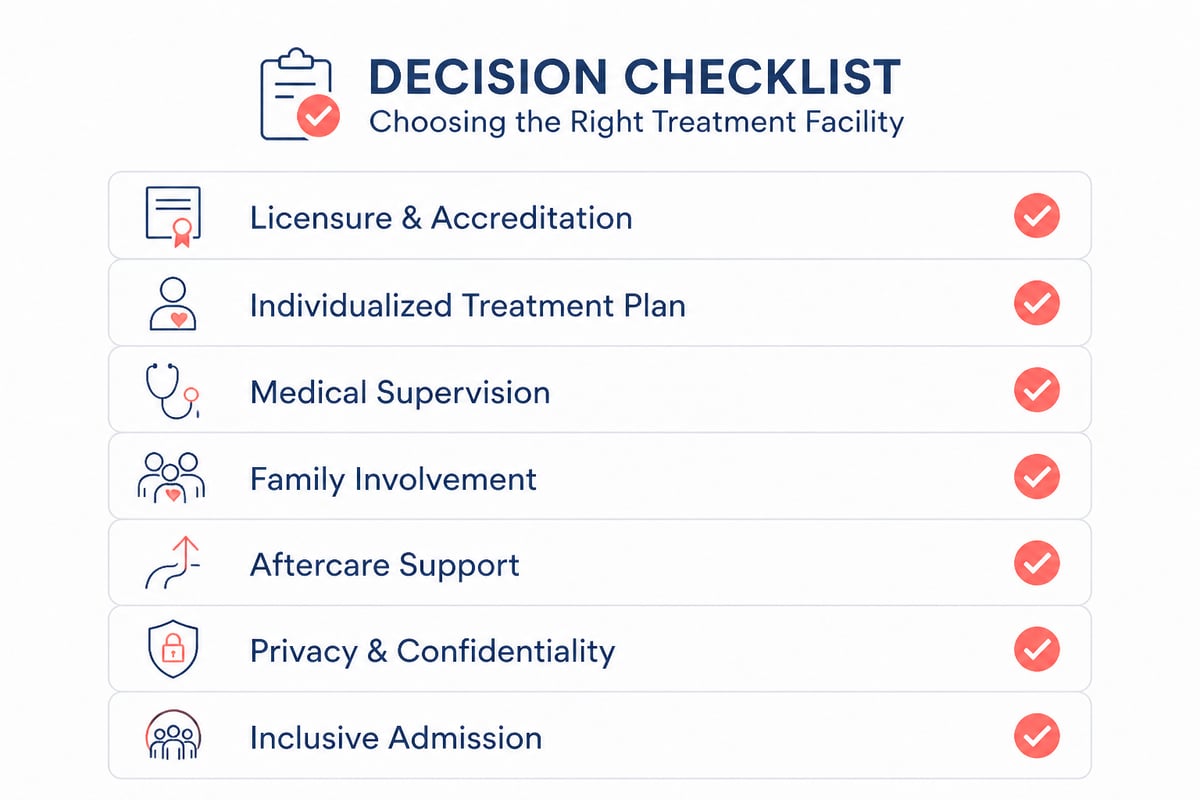
Choose a drug and treatment center by checking licensure, the range of care levels it offers, how it individualizes treatment, how it involves families, and what happens after discharge. Asking direct questions before admission prevents surprises later.
Consider these criteria:
- Licensing and accreditation. Confirm the facility is licensed by the state and ask about accreditation.
- Individualized planning. Ask whether the plan is written for you or follows a fixed template.
- Medical capability. Find out who supervises withdrawal and how medication is handled.
- Family involvement. Programs that include relatives tend to build stronger support at home.
- Aftercare. Ask what continuing care is arranged before you leave.
- Privacy. Understand how information is protected and how care can be arranged around work and home life.
- Inclusivity. Treatment should be offered regardless of gender, race, orientation, age, socioeconomic status or background.
Individual Care Center builds treatment around each patient, involves family members actively in the process, and provides discreet, private care. Those are the kinds of features worth comparing across any program you consider.
For a sense of the range of programs, the drug rehab treatment and substance abuse and treatment pages organize options in one place.
Why Are Facility Quality and Scale Worth Checking?
Facility quality varies widely, and the national treatment landscape is large enough that comparing options carefully is worthwhile. The 2024 N-SUMHSS survey included 21,205 eligible substance use and mental health facilities, with an overall response rate of 90.4%.
That number illustrates how many providers exist and why a structured comparison helps. Look beyond marketing language and ask each program the same set of questions about staffing, medical oversight, therapy methods and aftercare. Consistent questions make real differences visible.
A track record also matters. Individual Care Center reports more than 1,000 active members and 5,500 people helped, figures that speak to the scale of the community it serves.
What Role Does the Family Play in Treatment?
Family involvement improves treatment by repairing communication, setting healthy boundaries and preparing the home for recovery. Addiction affects everyone in a household, and recovery tends to hold better when relatives understand what the patient is working on.
Families can take part in several ways:
- Joining scheduled family therapy or education sessions
- Learning how to respond to cravings and relapse warning signs without blame
- Setting clear, consistent boundaries around money, housing and expectations
- Attending their own support groups, since relatives carry stress too
Parents of adolescents have a particularly active role. Young people often respond best when guardians participate in sessions and when school, home and treatment goals are coordinated. Individual Care Center involves family members actively in the treatment process, which reflects this principle.
How Do You Prepare for Admission?
Preparing for admission means gathering your medical and insurance information, arranging time away from obligations, and packing practical items. Doing this ahead of time lowers stress on the day you arrive.
Follow these steps:
- Call the facility and ask for an assessment. Be candid about substances used, how long and how much, since this guides medical planning.
- Verify coverage and costs. Ask the center directly about payment options and insurance, since policies differ by provider.
- Arrange work and family responsibilities. Notify your employer as needed and set up care for children or pets.
- Share medical history. List current medications, allergies and any mental health diagnoses.
- Pack according to the facility's list. Ask what items are permitted before you bring anything.
- Plan the transition home. Discuss aftercare and follow-up appointments before you leave, not after.
Entering treatment is a significant decision, and doubts on the way in are normal. Most programs expect them and have staff ready to talk through concerns.
What Happens After Treatment Ends?
After treatment, recovery continues through aftercare, which usually includes ongoing counseling, peer support, medication follow-up and a relapse prevention plan. Leaving a structured setting is a high-risk moment, so planning for it should begin during treatment.
Effective aftercare often combines:
- Step-down outpatient care, such as intensive outpatient programs
- Regular counseling sessions
- Mutual support groups and peer networks
- Continued medication management where appropriate
- Check-ins with family members and a clear plan for setbacks
A setback does not mean treatment failed. Many people return to care, adjust their plan and continue. The important step is returning to support quickly rather than waiting.
FAQ
What city has the worst drug abuse?
Rankings vary by the substance measured and the data source, so no single city holds the title across every measure. Local overdose, treatment admission and survey data give a more reliable picture than any headline ranking. Regardless of location, treatment is available in every region.
Do I need to stop using before I enter a treatment center?
No. Medical staff can manage withdrawal safely, and stopping abruptly on your own can be dangerous with certain substances such as alcohol. Be honest about your current use during assessment so the care team can plan appropriately.
How long does inpatient treatment last?
Length depends on the substance, the severity of the addiction and the patient's progress, so clinicians set it individually rather than by a fixed number. Ask the facility during assessment how it determines length of stay and what step-down options follow.
If you or someone you love is considering care, the next step is to place a call and ask for an assessment so a clinician can recommend the right level of support. Individual Care Center offers residential care through its inpatient substance abuse treatment program, where patients live at the facility around the clock and receive supervised, highly structured care for drug and alcohol abuse. A team member can answer your questions about privacy, family involvement and what admission looks like, so Call 866-693-1454 to speak with Individual Care Center and take that first step today.