
Alcohol withdrawal effects range from mild anxiety, sweating and tremor to seizures and delirium, and they usually begin 6 to 12 hours after the last drink. According to the NHS, symptoms usually last 3 to 7 days, although some can persist for months after heavy drinking. Because the severe forms can be life-threatening, the safest way to stop is under medical guidance rather than alone at home.
This guide walks through what happens in the body when drinking stops, a day-by-day timeline, the warning signs that require emergency care, and how treatment makes the process safer and more tolerable.
What Happens in the Body When You Stop Drinking Alcohol?
When someone who drinks heavily stops, the brain, which has adapted to constant alcohol exposure, becomes overactive. Alcohol slows nerve signaling by boosting GABA, the brain's main calming chemical, and by dampening glutamate, which excites nerve cells. Over months or years of heavy use, the brain compensates by reducing its own calming signals and increasing excitatory ones.
Once alcohol is removed, that balance tips the other way. The nervous system runs without its usual brake, which produces the hallmark signs of withdrawal: a racing heart, tremor, sweating, agitation, insomnia and, in serious cases, seizures.
The body also reacts in several other ways:
- Heart and blood pressure rise as the sympathetic nervous system overreacts.
- The digestive system becomes irritated, causing nausea, vomiting and loss of appetite.
- Sleep architecture is disrupted, so rest is shallow and fragmented.
- Fluids and electrolytes can fall out of balance, especially with vomiting and heavy sweating.
The severity depends on how much, how often and for how long a person has been drinking. NIAAA reports that up to half of people with alcohol use disorder experience some withdrawal symptoms when they stop, and a smaller share need medical care or monitoring.
What Are the Most Common Alcohol Withdrawal Symptoms?
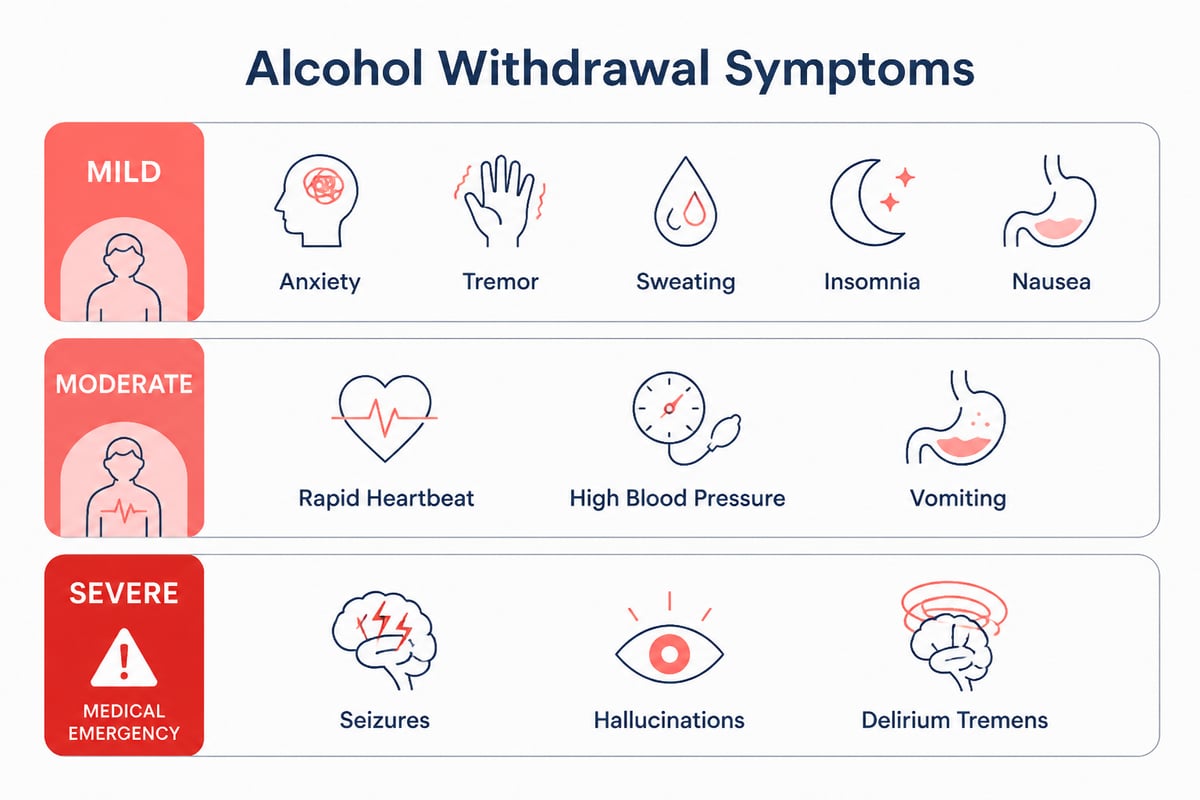
Common alcohol withdrawal symptoms include anxiety, tremor, sweating, nausea, insomnia and a rapid heartbeat. The NHS also lists vomiting, hallucinations, confusion and seizures among the effects that can occur as withdrawal progresses.
Symptoms generally fall into three tiers.
Mild to Moderate Symptoms
- Anxiety, irritability and restlessness
- Shaky hands or a visible tremor
- Sweating and clammy skin
- Headache
- Nausea, vomiting and poor appetite
- Trouble sleeping and vivid dreams
- Elevated heart rate and blood pressure
Severe Symptoms
- Seizures, which may occur without warning
- Hallucinations, such as seeing or feeling things that are not there
- Disorientation and confusion
- High fever and extreme agitation
Psychological Symptoms
Emotional distress is part of the picture from the start. Many people feel on edge, low or unable to concentrate, and these feelings can linger well after the physical symptoms ease.
Alcohol Withdrawal Timeline: What to Expect Day by Day
Alcohol withdrawal follows a fairly predictable sequence, though timing varies from person to person. MedlinePlus notes that symptoms tend to appear within 8 hours of the last drink, can sometimes begin days later, and typically peak within 24 to 72 hours.
Hours 6 to 12: The First Signs
Early symptoms are often mild. Expect anxiety, a shaky feeling, headache, nausea, sweating and difficulty sleeping. Many people are tempted to drink again at this stage simply to feel normal, which is a strong sign of physical dependence.
Hours 12 to 24: Intensifying Symptoms
Tremor and anxiety usually worsen. Some people experience hallucinations during this window, even without confusion. These can involve seeing, hearing or feeling things that are not real. Heart rate and blood pressure may climb.
Days 2 to 3: The Peak
This is typically the most dangerous period. Withdrawal seizures can occur early in withdrawal, and delirium tremens, the most severe form of withdrawal, can develop in the days after the last drink. Fever, profound confusion, severe agitation and a very fast heartbeat are signs of an emergency.
Days 4 to 7: Gradual Improvement
For most people, physical symptoms begin to fade. Tremor, sweating and nausea ease, though anxiety, low mood and poor sleep often continue. Fatigue is common, and appetite slowly returns.
Week 2 and Beyond: Lingering Effects
Acute symptoms usually resolve, but some effects can last weeks or months. This lingering set is often called protracted withdrawal or post-acute withdrawal. It can include:
- Ongoing insomnia or unrefreshing sleep
- Anxiety and low mood
- Irritability and mood swings
- Difficulty concentrating
- Fatigue and low energy
- Cravings that surface unexpectedly
These symptoms are a recognized part of recovery for many people, not a sign of failure. They tend to improve gradually with sleep, nutrition, therapy and support.
Can Alcohol Withdrawal Lead to Depression?
Yes, alcohol withdrawal can bring on depressed mood, which is common in the first days and weeks after stopping. Alcohol affects the brain's reward and mood systems, so when it is removed, the brain needs time to recalibrate its dopamine and serotonin activity. During that period, sadness, hopelessness, flat emotions and loss of interest are frequent.
For many people, this low mood eases within a few weeks as sleep and brain chemistry stabilize. Depression that persists, deepens or includes thoughts of self-harm needs professional attention. Drinking is often tied to depression in both directions: alcohol can worsen mood, and low mood can drive drinking. That is why treatment that addresses both at once tends to work better than treating either alone. Anyone having thoughts of suicide should call or text 988, the Suicide and Crisis Lifeline, right away.
How Does Sobriety Affect Anxiety?
Anxiety usually spikes in early sobriety and then improves, often to a level lower than it was during heavy drinking. Alcohol has a short-term calming effect, but as it wears off, the rebound can leave the nervous system more agitated than before. This cycle often makes baseline anxiety worse over time.
When drinking stops, the first week or two can feel intense because the brain is still overactive. As the nervous system recovers, many people notice calmer moods, deeper sleep and a steadier response to stress. Some find that anxiety they assumed was a personality trait was partly a product of alcohol.
Practical supports that help during this window include:
- Regular sleep and wake times
- Balanced meals and steady hydration
- Light daily exercise, such as walking or yoga
- Breathing and relaxation techniques
- Counseling or therapy to build coping skills
If anxiety remains severe after several weeks, a clinician can assess whether an underlying anxiety disorder needs its own treatment.
When Are Alcohol Withdrawal Effects a Medical Emergency?
Alcohol withdrawal becomes a medical emergency when it involves seizures, hallucinations, severe confusion, a high fever or a very rapid heartbeat. These are signs of possible delirium tremens, which requires immediate hospital care.
The scale of the problem is significant. NIAAA reports that alcohol withdrawal accounts for approximately 260,000 emergency department visits and 850 deaths each year. The NHS advises that suddenly stopping alcohol can be dangerous for someone who is dependent, and recommends seeking medical help before trying to stop.
Call 911 or go to the nearest emergency room if any of the following occur:
- A seizure
- Hallucinations or seeing things that are not there
- Severe confusion or not knowing where you are
- A fever with a pounding heartbeat
- Uncontrollable vomiting that prevents keeping fluids down
Who Is at Higher Risk of Severe Withdrawal?
People with a long history of heavy daily drinking face the highest risk, but several other factors raise the odds of a complicated course. Knowing them helps families decide whether medical supervision is essential.
Higher risk is associated with:
- A history of previous withdrawal episodes, especially severe ones, because each episode can sensitize the brain
- A past seizure or delirium tremens
- Heavy daily drinking over many years
- Older age
- Other medical conditions, such as liver, heart or kidney disease
- Co-occurring use of benzodiazepines or other sedatives
- Poor nutrition or dehydration at the time of stopping
A person who has been through withdrawal before and managed it alone may not manage it safely the next time. The pattern can worsen with each attempt, so prior experience does not predict a smooth outcome.
How Is Alcohol Withdrawal Treated Safely?
Alcohol withdrawal is treated with medical monitoring, medication to calm the overactive nervous system, fluids and nutrition, and a supportive setting. NIAAA says clinicians can prescribe medication to make withdrawal safer and less distressing, and its professional resource describes benzodiazepines as the gold-standard treatment for acute withdrawal.
Typical care includes:
- Assessment of drinking history, other substances and medical conditions
- Vital sign monitoring for heart rate, blood pressure and temperature
- Medication to reduce symptoms and prevent seizures
- Thiamine and other vitamins, since heavy drinking often depletes them
- Hydration and nutrition to correct imbalances
- Emotional support to manage anxiety and cravings
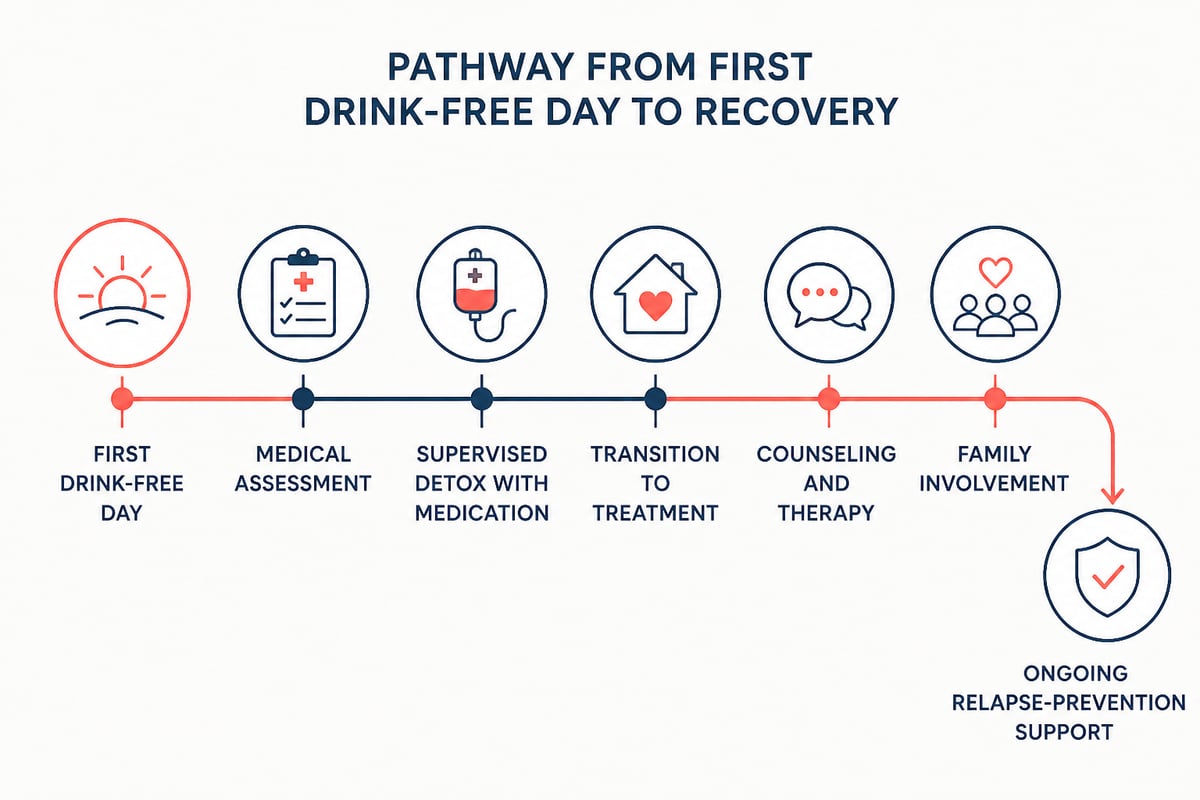
Detox is only the first step. It addresses the physical dependence, but it does not treat the habits and triggers behind the drinking. Moving directly from detox into counseling, therapy and a structured relapse-prevention plan gives recovery a far better chance of lasting. NIAAA’s guide to finding treatment explains the options and why medical support matters after prolonged heavy drinking, and its overview of alcohol use disorder describes the FDA-approved medications that can support recovery afterward.
Which Setting Is Right: Outpatient Detox or Inpatient Care?
The right setting depends on withdrawal risk, health, home environment and support. People with a mild to moderate risk and a stable, sober home may be candidates for supervised outpatient care, while those with a high risk of seizures, delirium tremens or serious medical problems are usually safer in a 24-hour inpatient setting.
Inpatient rehab provides round-the-clock supervision, a structured routine and removal from the cues and stressors that fuel drinking. That structure matters most during the first week, when symptoms peak and cravings are strongest. Staying on-site also removes easy access to alcohol at the moment of greatest temptation.
For appropriate candidates, medically supervised outpatient care can work. Individual Care Center offers outpatient detoxification for alcohol, opiates, benzodiazepines and other substances, with medication to manage withdrawal and keep patients comfortable. Treatment is discreet and private, which allows many people to address withdrawal without disrupting home and work life. Whether outpatient or inpatient care fits you is a decision best made with a clinician after an assessment.
For a closer look at how detox fits into treatment, see Individual Care Center's overview of alcohol detox treatment.
What Helps During Recovery After Withdrawal?
The weeks after acute withdrawal are the time to rebuild routines, treat underlying problems and put support in place. Physical symptoms fade first; the habits, stressors and emotions tied to drinking take longer, and they are where lasting recovery is built.
Elements that support long-term sobriety include:
- Individualized counseling that targets personal triggers and coping skills
- Medication support, when appropriate, to reduce cravings
- Family involvement, which strengthens accountability and repairs relationships
- Holistic practices such as yoga and acupuncture, which can ease stress and improve sleep
- Peer support from people who understand the process
- Sleep, nutrition and movement as daily anchors for mood and energy
Individual Care Center builds a tailored recovery plan for each patient, involves family members actively in the treatment process, and combines counseling, medication and therapies such as acupuncture and yoga. Treatment is offered regardless of gender, race, orientation, age, socioeconomic status or background. To understand the broader picture of how drinking affects health, the center's guide to the effects of alcohol addiction is a useful starting point, and its page on the dangers of alcohol abuse explains why professional care matters.

How Can Families Support Someone Going Through Withdrawal?
Families help most by encouraging medical care, staying calm and avoiding blame. Withdrawal is a physical process, and pressure or ultimatums can push someone toward secrecy or a dangerous attempt to quit alone.
Useful steps include:
- Learn the warning signs of severe withdrawal so you can act quickly.
- Encourage a medical assessment before the person stops drinking.
- Offer to help with practical tasks, such as appointments and transportation.
- Keep the environment calm, quiet and free of alcohol.
- Take part in family sessions if treatment offers them.
- Look after your own wellbeing, since supporting a loved one is demanding.
Families often carry fear, anger and exhaustion. Counseling for relatives, not only the patient, helps everyone move forward together.
FAQ
What are 5 withdrawal symptoms?
Five common alcohol withdrawal symptoms are anxiety, tremor, sweating, nausea and insomnia. A rapid heartbeat, headache and irritability are also frequent. Hallucinations, confusion and seizures indicate severe withdrawal and need emergency care.
How long do alcohol withdrawal effects last?
Acute symptoms typically begin 6 to 12 hours after the last drink, peak around 24 to 72 hours and usually ease within 3 to 7 days. Some effects, such as poor sleep, low mood and anxiety, can linger for weeks or months. Duration varies with drinking history and overall health.
Is it safe to detox from alcohol at home?
For anyone who drinks heavily or daily, detoxing alone is risky because seizures and delirium tremens can develop without warning. The NHS advises seeking medical help before stopping if withdrawal symptoms occur. A clinician can assess your risk and recommend the safest setting.
If you or someone you love is preparing to stop drinking, the safest next step is to speak with a clinician before the last drink instead of after symptoms begin. Individual Care Center provides private, personalized care, including medically supervised outpatient detoxification, with family members involved throughout. Individual Care Center is ready to talk through your situation and options, so Call 866-693-1454 to arrange a confidential conversation about starting treatment.