The effects of alcohol addiction reach nearly every organ system, along with mood, memory, relationships and daily safety. Alcohol contributes to more than 200 health conditions and is associated with an estimated 178,000 deaths in the United States each year, according to the National Institute on Alcohol Abuse and Alcoholism (NIAAA). Many of those effects can be slowed or partly reversed once drinking stops, which is why recognizing the damage early matters for the person drinking and for the family around them.
What Is Alcohol Addiction, and How Does It Develop?
Alcohol addiction, clinically called alcohol use disorder, is a medical condition in which a person cannot reliably control their drinking despite harm to their health, relationships or responsibilities. It develops gradually as repeated drinking changes how the brain handles reward, stress and impulse control.
Early on, alcohol feels relaxing because it increases calming signals in the brain and dampens excitatory ones. Over months or years, the brain adapts by reducing its own calming activity. The person then needs more alcohol to feel the same effect (tolerance) and feels anxious, shaky or unwell without it (withdrawal).
Several factors raise the likelihood of developing the disorder:
- A family history of alcohol problems
- Starting to drink at a young age
- Regular binge drinking
- Untreated anxiety, depression or trauma
- Drinking as the main way of coping with stress
Binge drinking deserves particular attention. Four or more drinks for women or five or more for men within about two hours typically raises blood alcohol concentration to 0.08%, and the NIAAA reports that binge drinking causes more than half of alcohol-related deaths in the United States. Younger adults are especially affected, with a significant share of those ages 18 to 25 meeting criteria for alcohol use disorder, according to NIAAA data.
How Does Alcohol Addiction Affect the Brain and Mental Health?
Alcohol addiction disrupts the brain's communication pathways, which changes mood, behavior, clear thinking and coordination. The NIAAA describes these disruptions to brain communication as the reason intoxicated people slur words, stumble and make poor decisions.
With long-term heavy use, the changes become more lasting:
- Memory problems: Blackouts become more frequent, and short-term memory and learning decline.
- Thinking and judgment: Planning, attention and impulse control weaken.
- Mood disorders: Depression and anxiety are both a cause and a consequence of heavy drinking. Alcohol briefly numbs distress, then deepens it as the effects wear off.
- Sleep disruption: Alcohol helps people fall asleep but fragments deep sleep, leaving them tired and more irritable the next day.
- Thiamine deficiency: Poor nutrition and impaired absorption can lead to serious conditions affecting memory and eye movement.
Mental health and addiction frequently feed each other. A person who drinks to quiet anxiety often finds the anxiety worse between drinks, which drives more drinking. This is why a mental health evaluation is a standard part of quality alcohol treatment rather than an optional extra.
What Does Alcohol Addiction Do to the Liver, Heart and Other Organs?
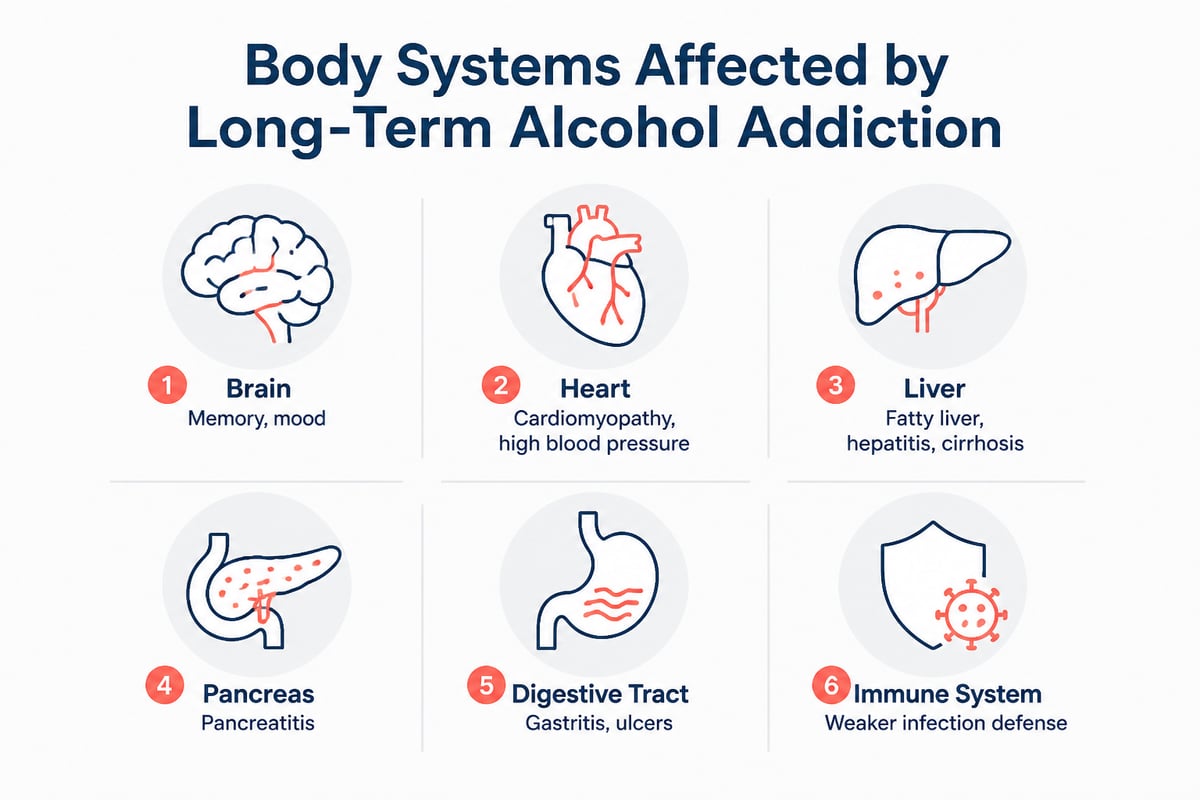
Chronic heavy drinking injures the liver, heart, pancreas, digestive tract and immune system, and the damage tends to accumulate quietly for years before symptoms appear. The liver processes nearly all the alcohol a person drinks, so it takes the heaviest toll.
Liver
Liver disease from alcohol typically progresses in stages. Fat builds up in liver cells first, then inflammation (alcoholic hepatitis) can develop, and scarring (cirrhosis) may follow. Early fatty liver often reverses with abstinence, while advanced cirrhosis cannot be undone.
Heart and Circulation
Long-term heavy drinking can weaken the heart muscle and cause cardiomyopathy, and alcohol misuse can also contribute to high blood pressure and irregular heartbeat, according to the NIAAA. Stroke risk rises alongside these changes.
Pancreas and Digestive System
Alcohol can trigger painful pancreatitis, irritate the stomach lining and cause ulcers, reflux and malabsorption of nutrients. Many people with severe alcohol addiction are malnourished even when they eat regularly.
Immune System
Alcohol weakens the body's defenses. A single heavy drinking occasion can slow the body's ability to fight infections for up to 24 hours, and people with chronic alcohol problems are more prone to pneumonia and other infections.
Cancer
Alcohol is linked to cancers of the mouth, throat, esophagus, liver, colon and breast. Even one drink per day is associated with a higher breast cancer risk for women compared with not drinking. Risk generally rises with the amount consumed over time.
For a deeper look at physical damage, the Individual Care Center overview of the health effects of alcohol covers additional detail.
What Are the 11 Symptoms of Alcohol Use Disorder?
Alcohol use disorder is diagnosed using a set of criteria, and meeting several within a 12-month period indicates the condition. The criteria used by clinicians include:
- Drinking more or for longer than intended
- Wanting to cut down but being unable to
- Spending a lot of time drinking or recovering from drinking
- Intense cravings or urges to drink
- Failing to meet obligations at work, school or home because of drinking
- Continuing to drink despite relationship problems caused by alcohol
- Giving up activities once enjoyed in favor of drinking
- Drinking in situations that are physically risky, such as before driving
- Continuing to drink despite knowing it worsens a physical or mental health problem
- Needing more alcohol to feel the same effect (tolerance)
- Experiencing withdrawal symptoms, or drinking to relieve or avoid them
Withdrawal symptoms include sweating, tremor, nausea, anxiety, insomnia and, in serious cases, seizures or delirium tremens. Because withdrawal can be dangerous, people with heavy, long-term use should not stop abruptly without medical supervision.
What Are the Consequences of Alcohol Addiction in Daily Life?
Beyond medical harm, the consequences of alcohol addiction show up in a person's safety, finances, career and legal standing. These effects often become visible to others before the person drinking acknowledges a problem.
- Safety: Impaired driving, falls, burns, drowning and violence all become more likely with heavy drinking.
- Work and school: Missed days, declining performance, conflicts with colleagues and job loss are common.
- Money: Spending on alcohol, medical bills, legal costs and lost income strain household finances.
- Legal trouble: DUI charges, public intoxication and domestic incidents carry lasting consequences.
- Isolation: Friendships fade as drinking takes priority, and shame often keeps people from reaching out.
These practical losses frequently become the turning point that prompts someone to seek help. The Individual Care Center page on the effects of alcohol abuse discusses how these patterns develop.

What Are the Signs That Someone You Live With Has an Alcohol Problem?
The clearest signs of living with someone who has an alcohol problem are secrecy around drinking, changes in mood and routine, and a growing pattern of broken promises. Families often notice the pattern long before the person does.
Common warning signs include:
- Hidden bottles or frequent empty containers in unexpected places
- Drinking alone or first thing in the morning
- Irritability, defensiveness or anger when drinking is mentioned
- Unexplained absences, missed events and unreliable behavior
- Minimizing or lying about how much they drink
- Visible shakiness or sweating that eases after a drink
- Neglected hygiene, appetite or responsibilities
Living with this pattern takes its own toll. Partners and children often experience anxiety, hypervigilance and a sense of walking on eggshells. Adolescents in these households face higher risk of emotional difficulties and, later, their own substance use. Family members are not the cause of the addiction, and they are not responsible for fixing it, but their involvement in treatment improves outcomes. This is why Individual Care Center involves family members actively in the treatment process.
Can the Effects of Alcohol Addiction Be Reversed?
Many effects of alcohol addiction improve significantly after drinking stops, though the degree of recovery depends on how long and how heavily a person drank. The NIAAA addresses this in its questions and answers on alcohol-related damage, including what happens when heavy drinking ends.
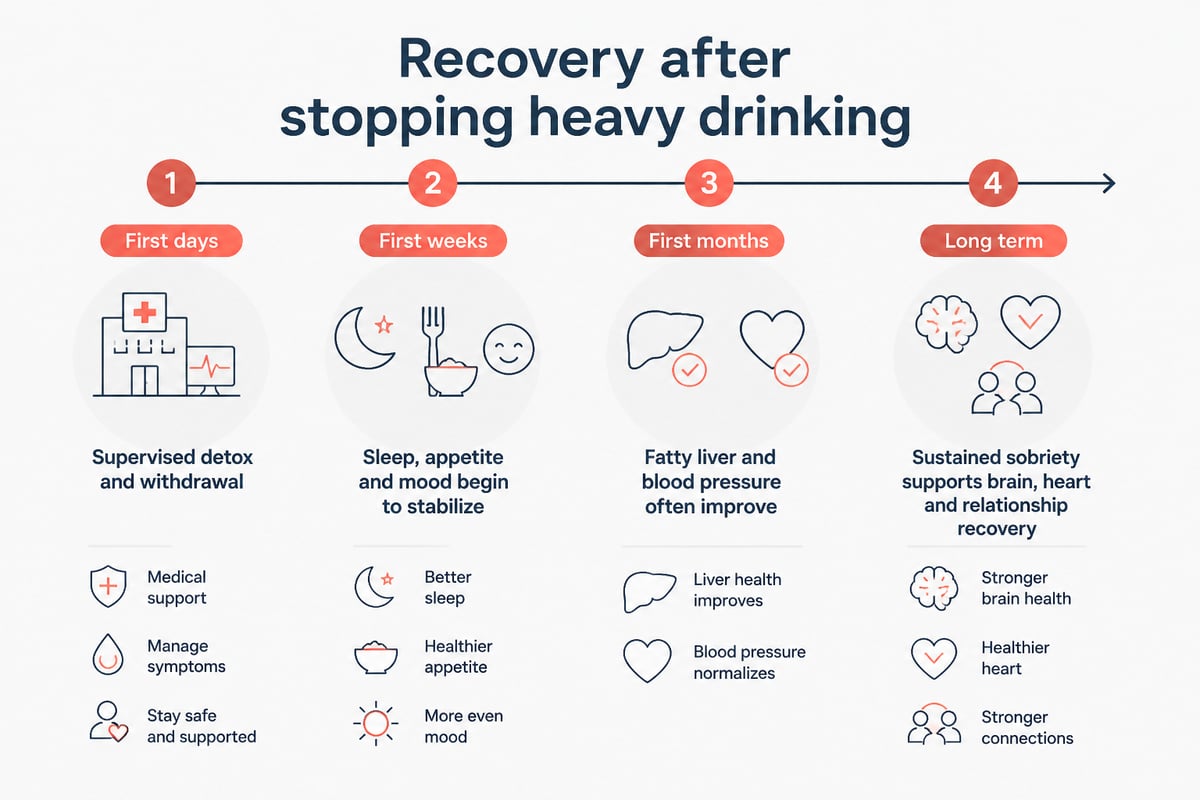
Improvements that commonly follow sustained sobriety include:
- Better sleep, energy and appetite within weeks
- Reversal of early fatty liver and reduced liver inflammation
- Lower blood pressure and improved heart function
- Clearer thinking and better memory over months
- Stabilized mood as brain chemistry rebalances
- Stronger immune response and fewer infections
Some damage, such as advanced cirrhosis or significant nerve injury, may be permanent, but stopping drinking still prevents further decline. The earlier a person seeks treatment, the more they typically recover.
What Does Treatment for Alcohol Addiction Involve?
Effective treatment combines medical detox, medication to reduce cravings, counseling, mental health care and ongoing aftercare. Inpatient rehab places a person in a supervised, structured environment around the clock, which removes access to alcohol and provides immediate medical support during withdrawal.
Individual Care Center's Alcohol Rehab program follows this model, with detox, medication for cravings, counseling, a mental health evaluation and aftercare. Treatment is built around each patient, with a tailored recovery plan for every person. Care combines counseling and medication, and it is delivered discreetly so patients can seek help privately.
A strong program typically includes:
- A medical and mental health assessment
- Supervised detox with symptom management
- Individual and group counseling
- Medication when clinically appropriate
- Family involvement and education
- A written aftercare plan covering the months after discharge
Aftercare matters because the risk of relapse remains highest in the first year. Ongoing therapy, support groups and regular check-ins help people apply what they learned once they return home.
FAQ
What are 10 harmful effects of alcoholism?
Common harmful effects include liver disease, heart muscle weakness, high blood pressure, pancreatitis, weakened immunity, increased cancer risk, memory loss, depression and anxiety, relationship breakdown, and job or legal problems. Which ones appear, and how severe they become, depends on how much and how long a person has been drinking.
How do I know if drinking has become addiction?
Difficulty cutting down, strong cravings, drinking despite clear harm and withdrawal symptoms when stopping are the main indicators. A medical professional can assess you against the 11 diagnostic criteria and recommend an appropriate level of care.
Is it safe to stop drinking suddenly?
For people who drink heavily every day, stopping abruptly can cause seizures or delirium tremens, which are medical emergencies. Detox under medical supervision is the safest way to withdraw.
If you are worried about your own drinking or a loved one's, a good next step is to write down the warning signs you have noticed and speak with a treatment professional about them. Individual Care Center offers private, personalized inpatient care, where patients live at the facility around the clock and receive supervised, structured treatment for alcohol and drug addiction, and you can learn about its Alcohol Rehab program before you call. Call a team member to learn about your options and take the first step toward recovery.




1 thought on “Effects of Alcohol Addiction on Body and Mind”