Treatment services for addiction range from free national helplines and online locators to intensive outpatient programs and 24-hour residential rehab, and the right choice depends on the severity of substance use, medical needs and home circumstances. This guide covers seven options in order of how people typically find and enter care, so adults and families can compare them side by side before making a call.
Most people begin with a referral source, then move to a level of care. The first seven items below help you find and compare programs. The last two describe the two levels of care that Individual Care Center provides.
1. SAMHSA's National Helpline
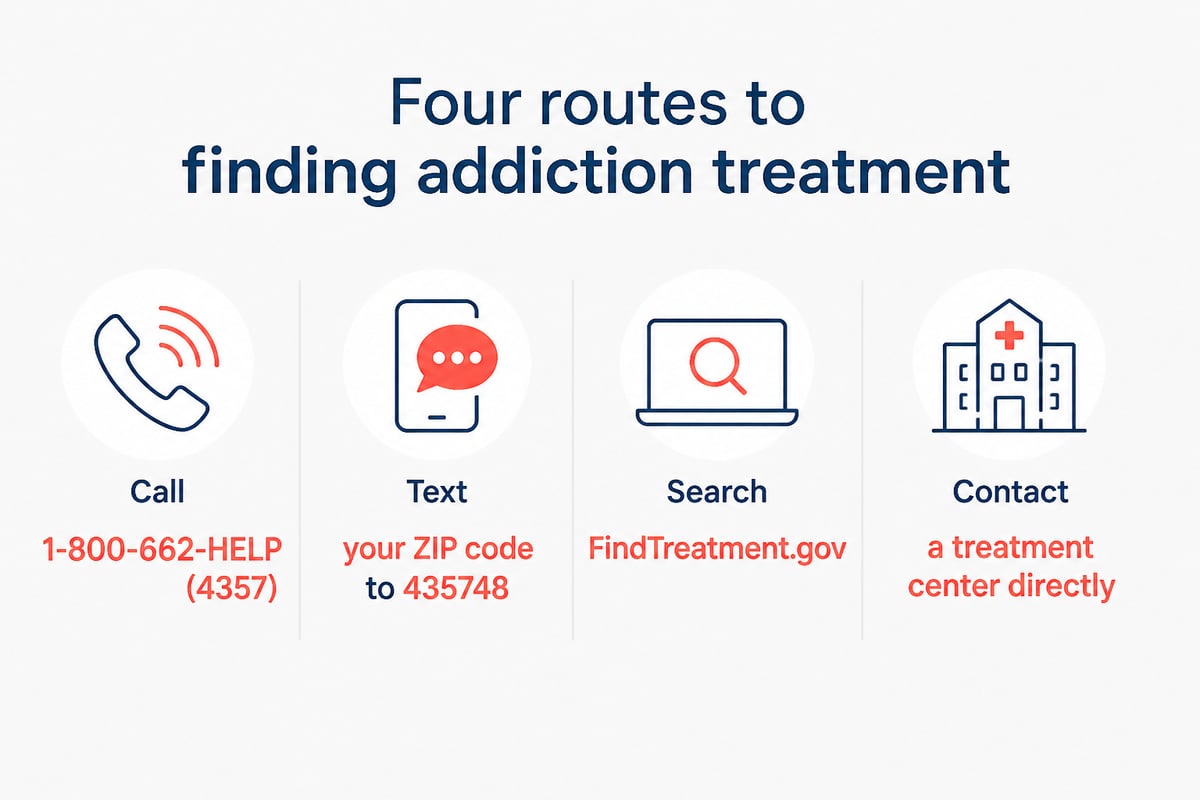
SAMHSA's National Helpline is the most direct starting point for anyone who does not know where to begin. It is a free, confidential, 24/7 treatment-referral and information service for mental and substance use disorders, operated by the Substance Abuse and Mental Health Services Administration. Because it is staffed around the clock, a caller can reach a person at any hour, including during a crisis. Callers can describe their situation and receive referrals to local programs, so they do not need to decide in advance which type of facility to contact.
- Price: Free
- Availability: 24 hours a day, 365 days a year
- Phone: 1-800-662-HELP (4357); TTY users call 1-800-487-4889
- Languages: Information and referrals in English and Spanish
- Suits: Anyone who needs treatment information or a referral to a local program and wants to speak with a person
Verdict: The best first call when you need guidance rather than a specific facility.
2. HELP4U Text Messaging Service
HELP4U is a text-based version of the national helpline for people who cannot or prefer not to make a voice call. You text a five-digit ZIP code to 435748 and receive treatment resources in return. Because the reply is tied to the ZIP code you send, the information you get back points toward services near the area you named. A person in a shared living space can send the message quietly and read the response on their own schedule.
- How it works: Text a 5-digit ZIP code to 435748
- Costs: Message frequency varies; message and data rates may apply
- Suits: People who prefer texting, or who need a quiet way to ask for help when privacy at home is limited
Verdict: A low-pressure entry point for those hesitant to speak on the phone.
3. FindTreatment.gov
FindTreatment.gov is a confidential, anonymous locator for mental and substance use disorder treatment across the United States and its territories. It lets you search at your own pace without speaking to anyone. A family can narrow results by state or county, set a travel distance, and filter for the specific services they need, then open individual listings to read what each facility offers. Because listings may show accepted payment, the tool can help screen out programs that may not fit a budget before any phone calls begin.
- Search filters: State, county, distance and specific services
- Listings: Facility entries may show services offered and accepted payment
- Privacy: Confidential and anonymous
- Suits: Families comparing nearby facilities and checking which services each one lists before calling
An overview of FindTreatment.gov from SAMHSA explains how it serves people seeking care, loved ones and responders.
Verdict: The strongest tool for side-by-side comparison of local programs.
4. Opioid Treatment Program Directory
The Opioid Treatment Program Directory lists programs by state that treat opioid addiction and dependence. This matters because opioid use disorder is commonly treated with medication, and SAMHSA identifies methadone, buprenorphine and naltrexone among substance use disorder treatment options. Browsing by state makes the directory practical for someone relocating, traveling for care, or living near a state line where the closest program may sit in a neighboring state. It narrows the search to programs built for opioid dependence rather than general addiction services.
- Scope: Directory organized by state
- Focus: Programs treating opioid addiction and dependence
- Suits: People or families specifically seeking care for opioid use disorder, including medication-based treatment
Verdict: Use it when opioids are the primary concern and medication is part of the plan.
5. Early Serious Mental Illness Treatment Locator
The Early Serious Mental Illness Treatment Locator lists programs for recent-onset serious mental illness. It applies when substance use appears alongside early psychiatric symptoms, which is common among adolescents and young adults. Early specialized care matters because symptoms such as disordered thinking or severe mood changes can be hard to separate from the effects of substances alone. A search here surfaces programs designed for the first stages of illness, and the confidential, anonymous format lets a worried parent explore options before raising the subject with their child.
- Privacy: Confidential and anonymous
- Coverage: United States and U.S. territories
- Focus: Specialized programs for recent-onset serious mental illness
- Suits: Families who suspect that substance use and a developing mental health condition are linked
Verdict: A narrow but valuable tool when mental health symptoms are new and significant.
6. Inpatient Substance Abuse Treatment at Individual Care Center
Inpatient rehab is addiction treatment in which patients live at the facility around the clock while receiving structured, supervised care. Individual Care Center’s inpatient substance abuse treatment is residential care with 24-hour medical supervision, individual and group therapy, medication management and aftercare planning. Living on site removes the daily exposure to people, places and routines tied to past use, and staff are present to respond if cravings or withdrawal symptoms surface at night. Aftercare planning begins within the program, so the transition home includes a defined next step rather than an abrupt end to support.
- Level of care: Residential, 24-hour supervision
- Core services: Individual and group therapy, medication management, aftercare planning
- Approach: A tailored recovery plan for each patient, active family involvement, and holistic care that combines counseling, medication and therapies such as acupuncture and yoga
- Privacy: Discreet and private care
- Suits: Severe or long-standing substance use, a history of relapse, or a home environment that makes early recovery difficult
- Price: Contact Individual Care Center for details
Verdict: The most intensive option, suited to people who need medical oversight and a protected setting. Treatment is offered regardless of gender, race, orientation, age, socioeconomic status or background.
7. Intensive Outpatient Program at Individual Care Center
An intensive outpatient program provides structured treatment while you continue living at home. Individual Care Center’s Intensive Outpatient Program meets 3 hours a day, 3 days a week, with group, family and individual therapy and relapse prevention education. The schedule leaves the remaining days free for a job, classes or caregiving, and what is learned in session can be applied to real situations at home. Relapse prevention education gives participants practical strategies for handling triggers as they arise, and family sessions bring household members into the process.
- Schedule: 3 hours a day, 3 days a week
- Core services: Group, family and individual therapy; relapse prevention education
- Suits: Adults and adolescents with a stable home, moderate substance use, or a need to step down from residential care while keeping work or school commitments
- Price: Contact Individual Care Center for details
Verdict: A strong middle option when daily life must continue but weekly structure is still needed.
Comparison of Addiction Treatment Services
| Option | Type | Format | Best for |
|---|---|---|---|
| SAMHSA's National Helpline | Referral | Phone, 24/7, English and Spanish | Treatment information and referrals |
| HELP4U | Referral | Text ZIP code to 435748 | Those who prefer texting |
| FindTreatment.gov | Locator | Online search with filters | Comparing nearby facilities |
| Opioid Treatment Program Directory | Directory | By state | Opioid use disorder |
| Early Serious Mental Illness Treatment Locator | Locator | Online, confidential | Recent-onset serious mental illness |
| Inpatient Substance Abuse Treatment | Residential care | 24-hour supervision | Severe use or unstable home settings |
| Intensive Outpatient Program | Outpatient care | 3 hours a day, 3 days a week | Stable home, moderate use, step-down care |
What Does Rehab Consist Of?
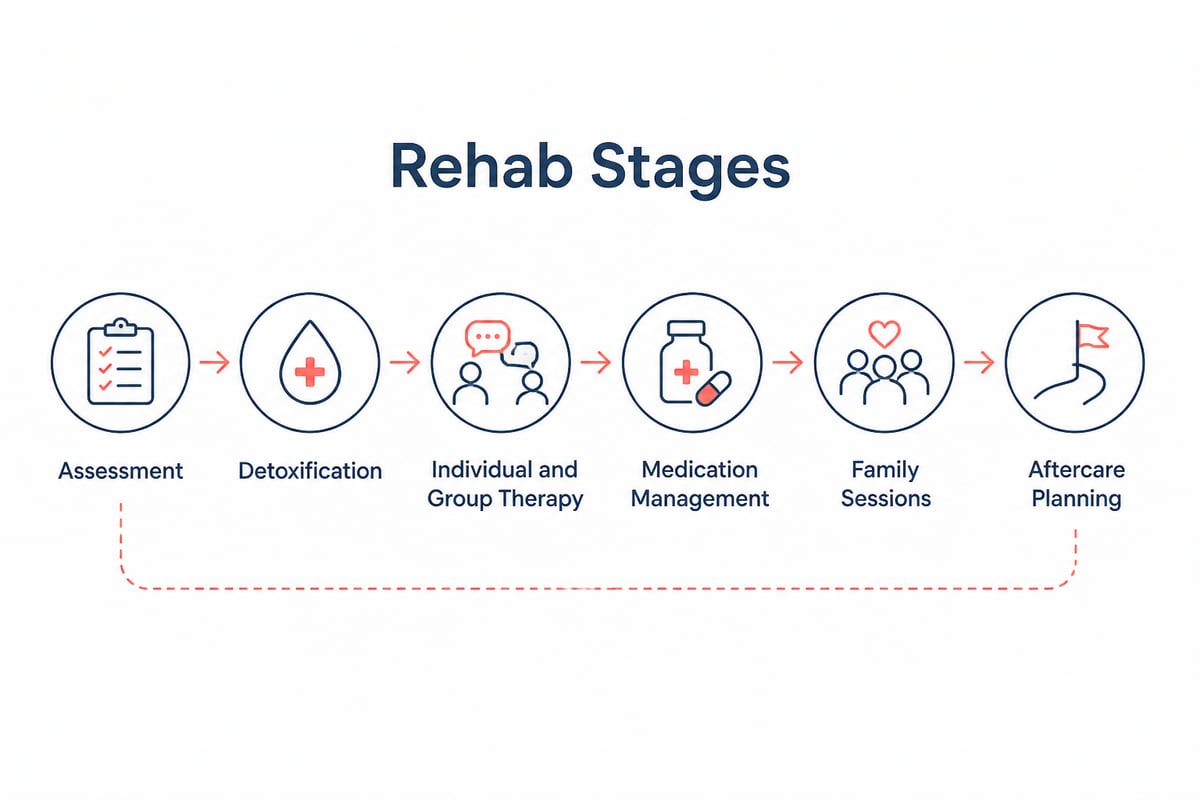
Rehab consists of a sequence of stages, usually assessment, detoxification when needed, therapy, medication management where appropriate, and aftercare planning. Individual and group counseling form the core, and family sessions help repair relationships and build a support system at home.
At Individual Care Center, care is holistic and built around the individual, pairing counseling and medication with therapies such as acupuncture and yoga. You can review the range of treatment programs and the approach to medication-assisted treatment to see how these elements fit together.
What Is Inpatient Therapy?
Inpatient therapy is counseling and clinical treatment delivered while you live at a rehabilitation facility, so support is available at any hour. The setting removes daily triggers, and staff can respond quickly to cravings, withdrawal symptoms or emotional distress.
Therapy typically includes one-on-one sessions, group work and family involvement. Individual Care Center involves family members actively in the treatment process, which supports both the patient and the household.
How Long Do Inpatient Programs Last?
Inpatient programs vary in length, and the right duration depends on the substance used, the person's history, and how they respond to treatment. Because lengths differ between facilities, the most reliable way to learn the timeline is to ask the program directly during intake. You can reach Individual Care Center through its contact page to discuss what a stay might involve for your situation.

How to Choose Among Treatment Services
Matching a level of care to your situation is more reliable than choosing by name or convenience alone. These questions help narrow the decision:
- How severe is the substance use? Daily or long-standing use, or a history of failed attempts, points toward residential care.
- Is the home environment supportive? A stable home makes outpatient care realistic; an unstable one favors inpatient.
- Are there co-occurring mental health concerns? These call for programs able to address both.
- Is medication part of the plan? Opioid and alcohol dependence often involve it; review alcohol dependence treatment if alcohol is the main concern.
- Does privacy matter? Individual Care Center provides discreet care, allowing treatment without interrupting home and work life.
A clinician's assessment should make the final call, and the referral tools above can connect you to one.
Why Choose Individual Care Center for Treatment Services
Individual Care Center builds treatment around each patient, with a tailored recovery plan for every person and active family participation. Its record includes over 1,000 active members, 5,500 people helped, 458 events organized and $9.6 million raised. Adults and adolescents affected by substance use or mental health problems are welcome, and care is private and evidence-based.
If you are comparing options, the substance treatment overview and the treatment facilities page are useful next reads.
FAQ
Can I get treatment services without health insurance?
Yes, you can start without insurance. SAMHSA's National Helpline is free and confidential, and it provides referrals regardless of coverage. Individual programs set their own payment arrangements, so ask each facility directly.
When is inpatient care better than outpatient care?
Inpatient care is generally the better fit for severe or long-standing substance use, repeated relapse, or an unstable home. Outpatient care suits people with a supportive home and moderate use who must keep up work or school.
Is addiction treatment confidential?
National resources such as SAMHSA's helpline and FindTreatment.gov are confidential, and the locator is anonymous. Individual Care Center provides discreet, private care so treatment can proceed without disrupting home and work life.
Your next step is to call SAMHSA's National Helpline at 1-800-662-HELP (4357) or speak with a treatment center about an assessment. If residential support looks right, review Individual Care Center’s inpatient substance abuse treatment, where care is supervised, structured and built around the individual. To talk through the right level of care for you or a family member, Call 866-693-1454 to reach Individual Care Center and start the conversation today.