
The right addiction treatment center in Los Angeles is one that matches your clinical needs: medically supervised detox for withdrawal, inpatient rehab for structured daily care, dual diagnosis support for co-occurring mental health conditions, medication when it is clinically indicated, and a written aftercare plan. This guide covers seven options and services worth considering, including what each involves, who it suits and what to ask before you commit. Prices are not listed for most programs, and coverage varies by plan, so verification with each provider matters.
How to Choose an Addiction Treatment Center in Los Angeles
A sound choice starts with a clinical assessment, not a brochure. Before comparing programs, gather four pieces of information:
- Substance and severity: Alcohol, benzodiazepine and opioid withdrawal each carry different medical risks, and some are dangerous without supervision.
- Mental health history: Depression, anxiety, trauma and other conditions often travel with addiction and change the treatment plan.
- Insurance coverage: Confirm in-network status, authorization rules and your out-of-pocket responsibility before admission.
- Home and work situation: Decide whether you need full residential care or can manage a lower level of care with strong support.
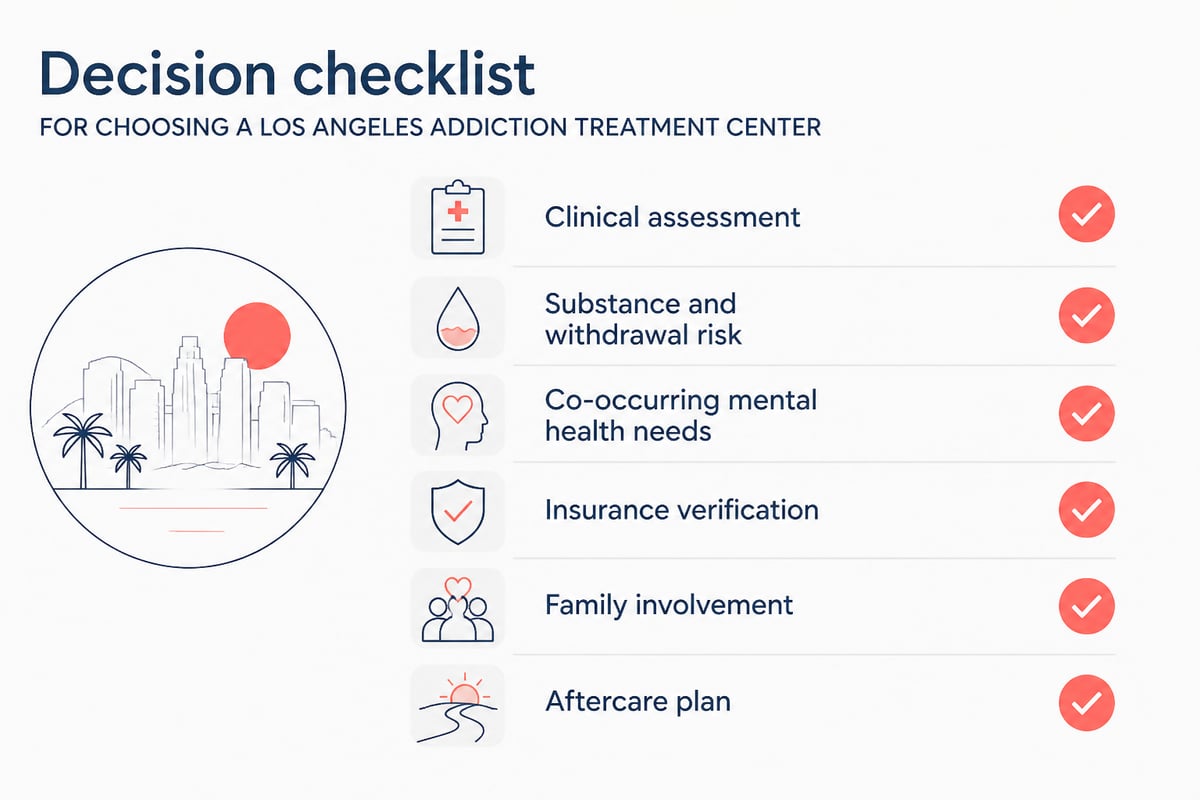
Ask each provider how treatment plans are individualized, whether licensed medical staff are on site around the clock, how family members take part, and what happens after discharge. Clear answers to these questions say more than amenities do.
1. Drug and Alcohol Detox (Alta Centers)
Medical detox at Alta Centers is a supervised withdrawal program offered in Los Angeles for people who need clinical support before ongoing treatment. It is often the first step, because stopping alcohol or certain drugs abruptly can cause serious complications.
- What it is: Medically supported withdrawal care, with insurance benefits verification offered.
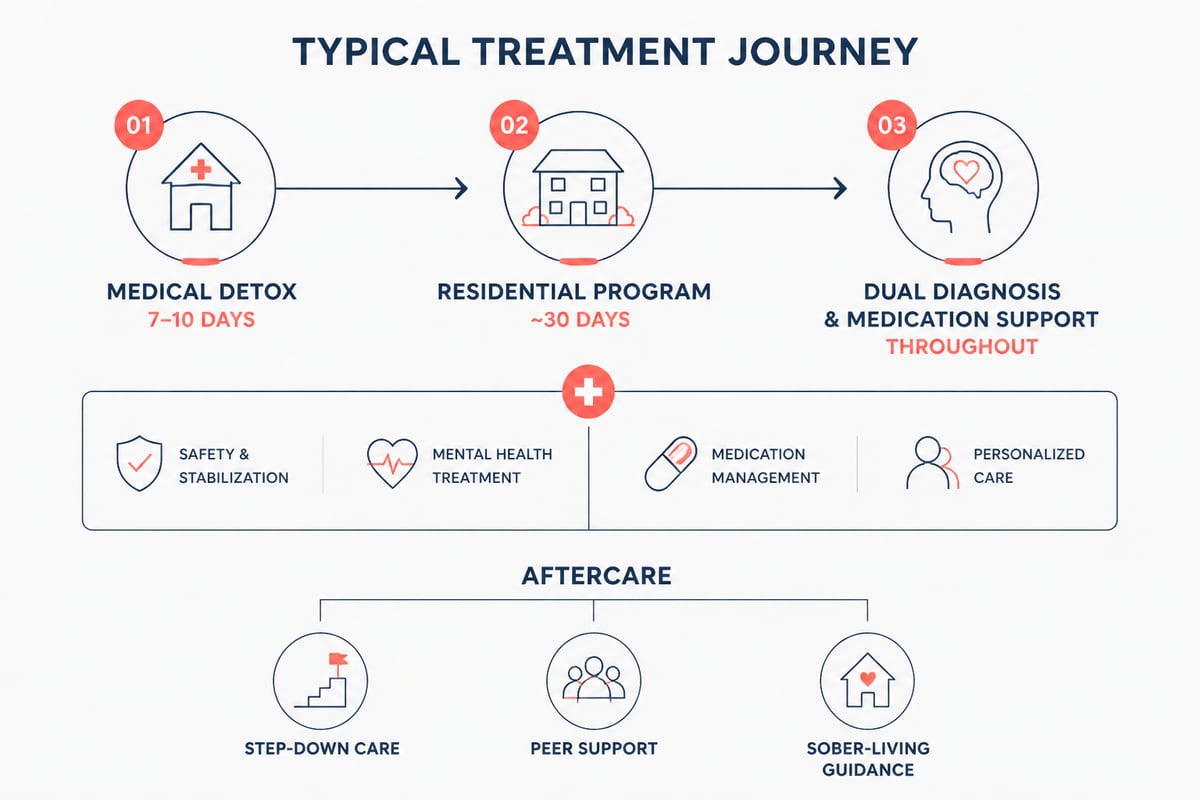
- Timing: Alta Centers says its detox commonly lasts 7 to 10 days, followed by a 30-day residential program, though timing varies with clinical recommendations and progress, according to Alta Centers.
- Price: Not published here; coverage depends on the plan.
- Best for: People who need medically supported withdrawal before starting longer-term treatment.
Verdict: A logical entry point when withdrawal risk is high, as long as it leads directly into a treatment program rather than ending at discharge.
2. Inpatient Rehab (Alta Centers)
Inpatient rehab at Alta Centers is residential addiction treatment that provides structured, round-the-clock care in a facility setting. The program is listed among its core Los Angeles services alongside detox, dual-diagnosis care and aftercare.
- What it is: Residential treatment with a daily clinical schedule.
- Insurance: Major insurance plans are accepted, but coverage varies by plan. Alta Centers states it is in-network with insurers including Aetna, Anthem, Beacon/Carelon, Cigna, Humana, Optum and UnitedHealthcare, per its inpatient drug rehab page.
- Best for: People who need a structured, 24-hour environment away from triggers.
Verdict: A strong fit for moderate to severe addiction when home settings undermine early recovery. Confirm your own plan's benefits before admission.
3. Dual Diagnosis Treatment (Alta Centers)
Dual diagnosis treatment addresses addiction and a co-occurring mental health condition at the same time, rather than treating one and hoping the other resolves. Alta Centers offers it alongside detox and residential care.
- What it is: Integrated care for substance use and mental health needs.
- Insurance: Eligibility and patient responsibility depend on the plan.
- Best for: People whose substance use is tied to anxiety, depression, trauma or other mental health needs.
Verdict: Essential when mental health symptoms predate or drive substance use. Ask how psychiatric assessment and therapy are coordinated within the program.
4. Medication-Assisted Treatment (MAT) (Alta Centers)
Medication-assisted treatment combines FDA-approved medication with counseling and is listed among Alta Centers' treatment programs. For opioid use disorder, the National Institute on Drug Abuse identifies methadone, buprenorphine and naltrexone as FDA-approved medications, and it describes medication as standard treatment for fentanyl addiction, per NIDA.
- What it is: Medication paired with behavioral therapy under clinical supervision.
- Selection: The choice of medication requires a clinical assessment.
- Best for: People with opioid use disorder who may benefit from medication as part of treatment.
Verdict: Evidence-based and widely endorsed for opioid addiction. For background on one common option, see this explanation of what Suboxone treatment for opiate addiction means.
5. Aftercare (Alta Centers)
Aftercare is a personalized continuing-care plan that supports recovery once residential treatment ends. It is where many relapses are prevented or allowed to happen, so it deserves the same scrutiny as the initial program.
- What it may include: Step-down care, therapy, peer support, medication management and sober-living recommendations.
- Best for: People transitioning out of residential care who want continued structure.
Verdict: A necessary component rather than an extra. Ask for the written plan before discharge, not after.
6. Inpatient Substance Abuse Treatment (Individual Care Center)
Inpatient Substance Abuse Treatment at Individual Care Center is residential addiction treatment with 24-hour medical supervision, individual and group therapy, medication management and aftercare planning. Treatment is built around each patient, with a tailored recovery plan for every person.
- Approach: Holistic care that combines counseling, medication and therapies such as acupuncture and yoga.
- Family role: Family members are actively involved in the treatment process.
- Privacy: Care is discreet and private, designed to allow treatment without interrupting home and work life.
- Access: Treatment is offered regardless of gender, race, orientation, age, socioeconomic status or background.
- Track record: Over 1,000 active members and 5,500 people helped.
- Best for: Adults who want private, individualized residential care with family participation.
Verdict: A good fit for families who want to be part of the process. Contact Individual Care Center directly for details on locations, scheduling and costs.
7. Alcohol Rehab (Individual Care Center)
Alcohol Rehab at Individual Care Center is a comprehensive alcohol addiction program covering detox, medication for cravings, counseling, mental health evaluation and aftercare. Alcohol withdrawal can be medically serious, so combining detox with ongoing counseling in one plan keeps the transition from withdrawal to treatment continuous.
- Components: Detox, craving-reduction medication, counseling, mental health evaluation and aftercare.
- Personalization: Each patient receives a tailored recovery plan, with family members involved.
- Further reading: The effects of alcohol addiction explain why medical oversight matters early.
- Best for: Adults whose primary substance is alcohol and who want a single, coordinated program.
Verdict: Well suited to alcohol-specific treatment where mental health screening and aftercare are built in from the start.
Side-by-Side Comparison of the Options
The table below summarizes the seven options by level of care and best use. Read the rows as steps along a continuum rather than competing choices. Detox, inpatient rehab, dual diagnosis care, medication and aftercare at Alta Centers are designed to connect: according to Alta Centers, detox commonly lasts 7 to 10 days and is followed by a 30-day residential program, with timing adjusted to clinical recommendations and progress. Dual diagnosis care and medication-assisted treatment are listed as services available alongside detox and residential care, which means they usually overlay a level of care rather than replace it.
| Option | Provider | Level of care | Best for |
|---|---|---|---|
| Drug and alcohol detox | Alta Centers | Medical withdrawal support | Medically supported withdrawal |
| Inpatient rehab | Alta Centers | Residential, round-the-clock | Structured 24-hour treatment |
| Dual diagnosis treatment | Alta Centers | Integrated mental health and addiction care | Co-occurring conditions |
| Medication-assisted treatment | Alta Centers | Medication plus therapy | Opioid use disorder |
| Aftercare | Alta Centers | Continuing care | Transition from residential care |
| Inpatient Substance Abuse Treatment | Individual Care Center | Residential, 24-hour medical supervision | Private, individualized care with family involvement |
| Alcohol Rehab | Individual Care Center | Detox through aftercare | Alcohol addiction |
The two Individual Care Center programs differ from the Alta Centers entries in structure. Inpatient Substance Abuse Treatment is a residential program that bundles supervision, therapy, medication management and aftercare planning, while Alcohol Rehab packages detox, craving-reduction medication, counseling, mental health evaluation and aftercare into one alcohol-specific plan. A person with opioid dependence and depression, for example, would likely combine several Alta Centers entries: detox, then residential care with dual diagnosis support and medication, then a written aftercare plan. A person whose primary substance is alcohol might find a single coordinated program simpler to follow. Because prices are not published for most of these options, use the table to narrow the field, then request a benefits verification and a clinical assessment to confirm which combination fits.
What Insurance Typically Covers
Insurance coverage depends on your plan, not on the facility's marketing. Alta Centers states it is in-network with major insurers, including Aetna, Anthem, Beacon/Carelon, Cigna, Geisinger, Highmark, Humana, Optum and UnitedHealthcare, yet it also notes that coverage depends on the individual plan. Two members of the same insurer can have different benefits, because plans set their own deductibles, copays and limits. The same caution applies anywhere you look, including any addiction treatment center in Los Angeles you are considering.
Coverage may also be assessed level by level, so detox, residential treatment, dual diagnosis care and aftercare can each be reviewed separately. Eligibility and patient responsibility for dual diagnosis care depend on the plan. Alta Centers offers insurance benefits verification for its detox program, which lets the facility confirm what your plan authorizes before you commit.
Before admission, ask for a benefits verification and confirm these points:
- Whether the facility is in-network for your specific plan
- Whether pre-authorization is required for detox and residential levels of care
- How many days of residential treatment are approved at the start
- Your deductible, copay or coinsurance responsibility
- Whether medication costs fall under medical or pharmacy benefits
The last point matters for medication-assisted treatment. If a clinician recommends a medication, its prescription may be billed through a different benefit than the facility stay, with its own copay. Ask how initial authorization works and what happens if the clinical team recommends more time than the first approval covers, since Alta Centers notes that actual timing varies with clinical recommendations and progress. Getting these answers in writing prevents surprise bills and helps your family plan realistically.

Questions to Ask Before You Enroll
A short list of direct questions separates well-run programs from weak ones.
- Who performs the initial assessment, and what are their credentials?
- Is medical staff available on site 24 hours a day?
- How is the treatment plan changed if progress is slower or faster than expected?
- How are family members informed and included?
- What does the written aftercare plan contain, and who follows up after discharge?
- How does the program handle privacy for patients with work or family obligations?
If you want to compare levels of care more broadly, the treatment programs overview at Individual Care Center outlines how programs differ.
Your next step is to gather your insurance card and a short list of your substance use and health history, then request an assessment so a clinician can recommend the right level of care. If residential treatment looks like the right fit, Inpatient Substance Abuse Treatment at Individual Care Center offers 24-hour supervised care with a tailored plan and family involvement. For questions about admission, privacy and next steps, Call 866-693-1454 to speak with Individual Care Center about which program fits your situation.